

Hair Clips for Long Hair: Types That Actually Hold
Delena MarklandThe best hair clips for long hair are large claw clips (4-5 inches minimum), lay-flat oval clips, and French barrettes. Anything smaller will slip out within an hour. I'm Delena, licensed cosmetologist and owner of The Pixie Garden, and I've spent years testing accessories on clients with hair past their shoulders. Long hair has weight, volume, and specific needs that regular clips simply can't handle. What works on a bob will fail on length that reaches mid-back or beyond.
The clip you choose depends entirely on what you need it to do. Are you throwing your hair up for a workout, styling for a full workday at a desk, or creating a polished updo for an event? Each scenario requires different engineering. I'll walk you through the clip types that actually perform on long hair, explain why they work, and share the finishing technique that makes any clip style look intentional rather than rushed.
Jumbo Claw Clips for Quick Updos
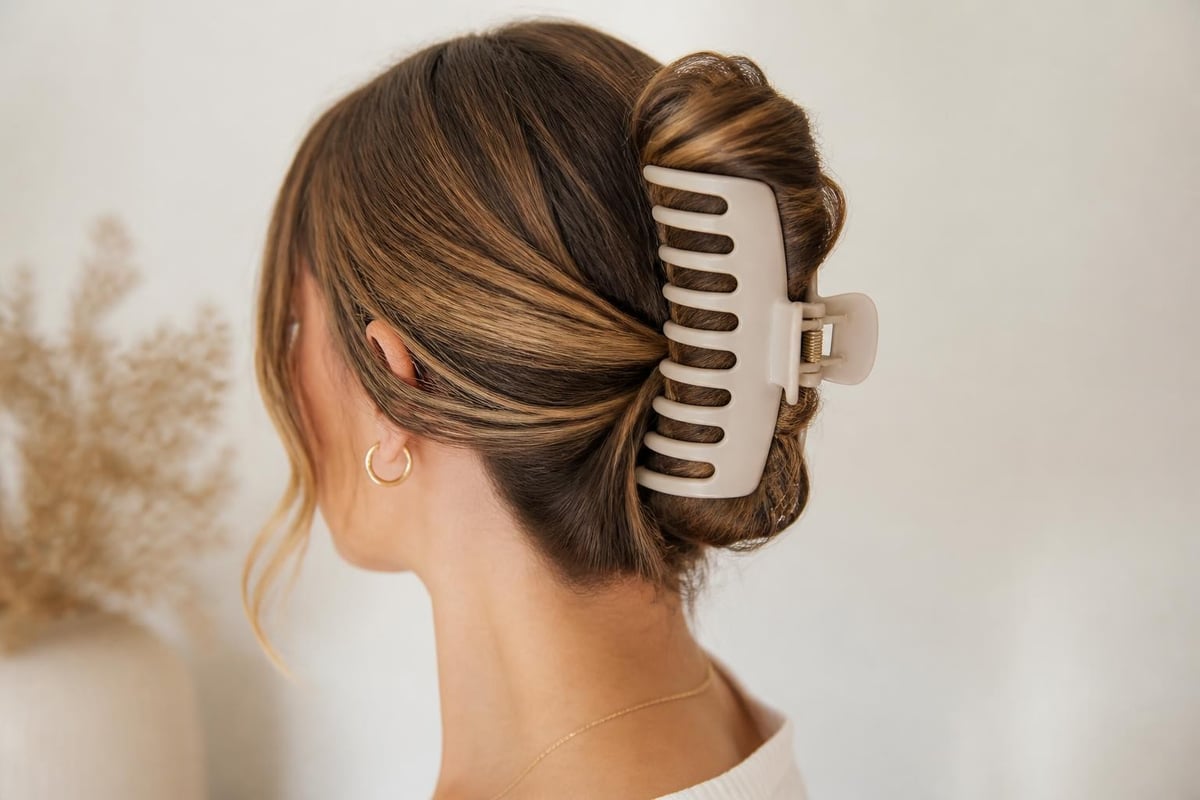
Jumbo Large claw clips are the workhorse of long hair accessories. When I say large, I mean 4 to 5 inches at minimum. Smaller claws don't have enough teeth or jaw spread to catch all the hair in one pass. You end up with sections slipping out, uneven hold, and a clip that feels like it's about to pop open.
The mechanics matter here. A proper jumbo claw has deep teeth that interlock when closed, distributing tension across multiple contact points rather than pinching at one spot. This prevents the clip from sliding down under the weight of your hair. Look for clips with slightly curved jaws that follow the natural curve of your head. Flat claws work against your head shape and create pressure points.
Why Claw Clips Work for Volume and Weight
Long hair has mass. Claw clips built for thick hair need structural integrity to handle that load without snapping. I've seen too many drugstore claws break at the hinge after a few weeks of use. Metal hinges outlast plastic every time.
- Jaw spread: Minimum 4 inches to accommodate thick or curly long hair
- Tooth depth: Deeper teeth grip better without pulling
- Hinge quality: Metal hardware holds up under daily stress
- Weight distribution: Multiple teeth spread pressure evenly
The square jumbo claws are my top recommendation for gym sessions, quick errands, or working from home. You can twist your hair into a loose bun, clip it at the crown, and forget about it. The large 5-inch square claw clip at The Pixie Garden is built specifically for this purpose.
Lay-Flat Oval Clips for All-Day Comfort
Lay-flat clips are underrated for long hair, especially if you're sitting in a car, leaning back in a chair, or lying down. Traditional claw clips create a bulge at the back of your head that's uncomfortable the moment you rest against anything. Oval lay-flat clips solve this by positioning the hair horizontally along your head rather than vertically in a bun.
The design is simple but effective. The clip has an elongated oval shape with a spring-loaded closure. You gather your hair at the nape, twist it once or twice, then slide the clip over the twist horizontally. The result is a low, flat profile that sits close to your scalp. No pressure, no bulk, no headache after wearing it for hours.
The two I keep on hand are the Jumbo Lay Flat Oval Claw Clip in solid black, pink, or pearl, which is the practical all-day workhorse, and the Jumbo Lay Flat Polka Dot Claw Clip, which runs a half inch longer at 2.5 inches so it handles more volume before the grip strains at capacity. Both use a lay flat hinge that sits flush rather than protruding, and the PVC flexes under load instead of snapping. If the clip is going to be visible on hair this long, the polka dot is the one I reach for when it is meant to be part of the look.
When Lay-Flat Clips Are Essential
If you drive frequently, work in a reclining position, or need to wear a headset, lay-flat clips are non-negotiable. I recommend them to clients who complain about regular clips digging into their scalp during long meetings or commutes.
| Clip Type | Profile Height | Comfort When Reclining | Best Use Case |
|---|---|---|---|
| Jumbo Claw | High (2-3 inches) | Poor | Quick updos, active movement |
| Lay-Flat Oval | Low (0.5-1 inch) | Excellent | Driving, desk work, sleeping |
| French Barrette | Medium (1-2 inches) | Good | Polished low styles |
You can also sleep in a lay-flat clip if you need to preserve a blowout overnight. The low profile won't create dents or pressure marks the way other clips do. Just don't twist the hair too tightly before clipping, or you'll wake up with kinks.
Snap Clips for Crease-Free Hold
Snap clips (also called contour clips) are the secret weapon for long hair when you need zero creasing. These clips have a curved base that follows your head shape and a double-snap closure that locks the clip in place without applying crushing pressure. The result is secure hold that doesn't leave lines or bends in your hair when you take the clip out.
The technology here is about pressure distribution. Instead of clamping down on a single point like a traditional clip, snap clips spread tension along a curved line. This is critical for long hair that you're styling for an event. You can section hair, clip it out of the way while you work on other sections, then release it without having to restyle around clip marks.
Professional Styling Applications
I use snap clips during every salon appointment. When I'm creating layers, curling sections, or applying treatments, I need clips that hold firmly but release cleanly. For clients with long hair, snap clips are the only option that won't compromise the finished style.
- Section hair without creating bends or creases
- Hold heavy sections securely during styling
- Release cleanly without pulling or snagging
- Reposition multiple times without losing grip
If you blow-dry your long hair in sections, snap clips are essential. You can clip up the top layers while you work on the bottom, and when you unclip, the hair falls naturally without weird dents. This is especially important for straight or fine hair that shows every indentation.
The snap clips I keep reaching for on long hair are the checkered snap clips that let go without a dent, a selected pick I only have five of on hand right now. The crease-free part matters far more on length than it does on a bob: a bend set halfway down the strand sits out in the open where everyone sees it, while the same bend on chin-length hair sits closer to the ends, where the shape hides more of it. A crease still shows on any length; it is simply less exposed on a bob. After over 25 years on the salon floor, I have watched more finished blowouts undone by a single clip mark at mid-shaft than by any curling iron. I use these to hold the top layers off the crown while I work the bottom sections, and to pin a grown-out fringe back during a treatment, because they release clean every time.
Handmade and Crochet Clips for Texture and Personality
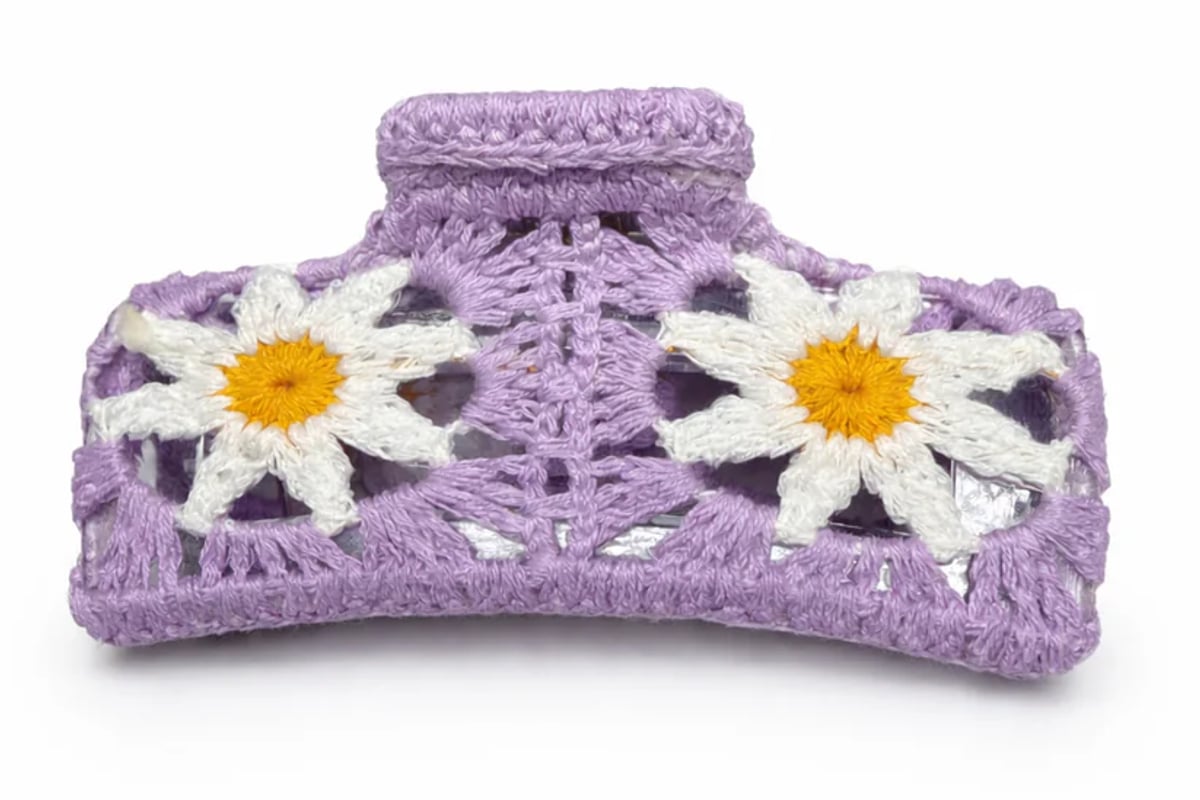
Here's where function meets style. Handmade clips, particularly crochet and embroidered designs, aren't just decorative. They offer texture that actually grips long hair better than smooth plastic or metal. The yarn wrapping, dimensional flowers, and layered fabric create friction that prevents slipping. This matters more than most people realize.
When I curated pieces for The Handmade Collection, I'm thinking about how the texture interacts with different hair types. Smooth clips slide on smooth hair. Textured clips catch and hold. Every clip in this collection is crafted by hand using crochet and embroidery techniques that no factory process can replicate at scale. The yarn wrapping, the flower placement, the texture depth, the dimensional detail of each petal and leaf-these are the results of skilled hands working with intention on each piece.
Why Texture Improves Grip
The physics are straightforward. A textured surface has more contact points with individual hair strands than a smooth surface. This increases static friction, which is what keeps the clip from sliding down. You can test this yourself: try holding your hair with a smooth plastic clip versus a fabric-wrapped one. The fabric version holds longer with less pressure.
- Yarn-wrapped clips: Best for fine or slippery hair
- Crochet flowers: Add dimension and multiple grip points
- Embroidered details: Increase surface friction
- Fabric layers: Create cushioning that protects hair from metal
These clips also solve the visual problem of long hair. When you have a lot of hair, a standard plastic claw can look juvenile or purely functional. A handmade clip with dimensional detail looks intentional. It reads as a style choice, not a convenience move. The crochet purple daisy claw clip is one example of how texture and design work together on long hair.
French Barrettes for Sleek Low Styles
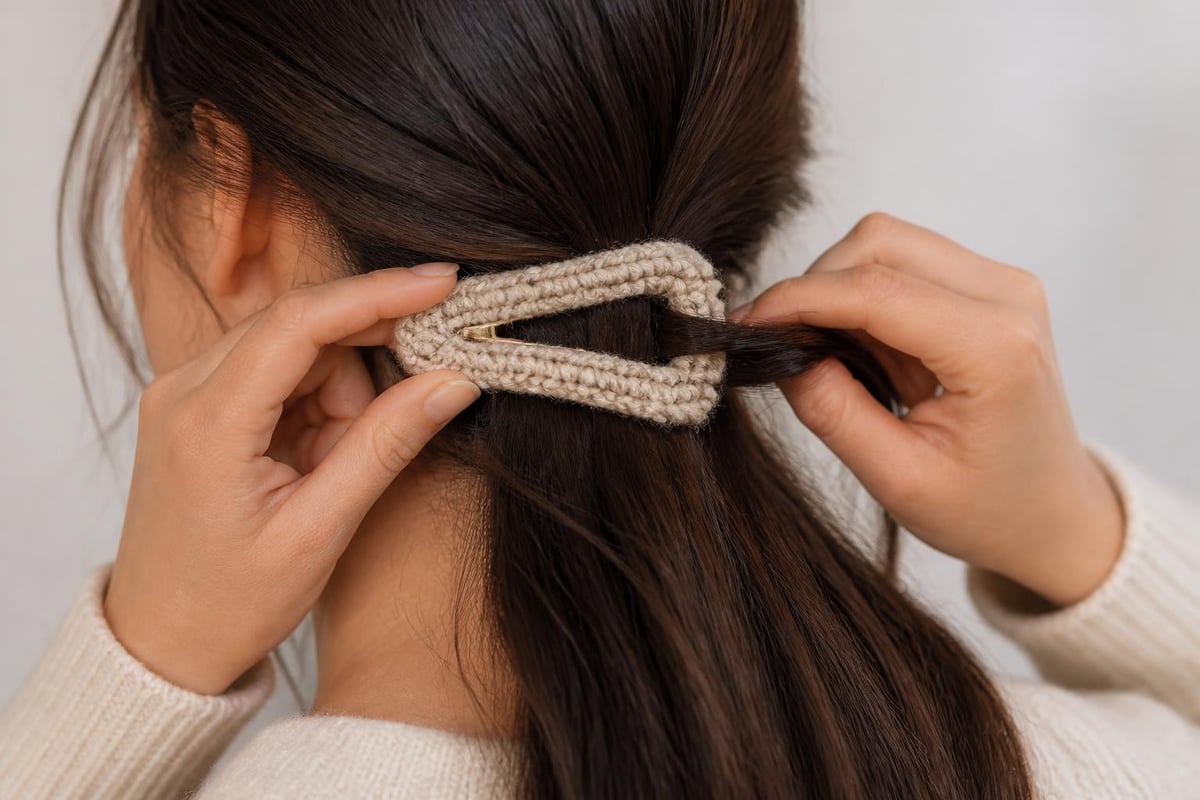
French barrettes are the most underrated hair clips for long hair in 2026. These clips have an automatic spring mechanism that allows them to open wide, accept a large section of hair, and then snap shut with even tension along the entire length of the barrette. The result is a sleek, secure hold that works beautifully for low ponytails, half-up styles, and side sweeps.
The key difference between a French barrette and other clips is the locking mechanism. When you press the top bar, the entire clip opens. When you release, it closes with equal pressure from end to end. This prevents the weak-point failures you get with single-clasp clips, where one end holds but the other slips out after an hour.
Styling Long Hair with French Barrettes
French barrettes excel at polished, finished looks. If you're heading to a professional setting or a formal event and want your hair off your face without doing a full updo, a French barrette at the nape is your solution. Gather your hair low, twist it once, and clip it horizontally. The length of the barrette distributes the weight so the clip stays put all day.
You can also use French barrettes for half-up styles. Take the top section of your hair from temple to temple, twist it lightly, and clip it at the crown with a barrette positioned horizontally. This gives you the face-framing benefit of hair pulled back without the tension of a ponytail elastic. A half-up claw clip style does the same job when you want more volume through the crown.
| Barrette Length | Hair Thickness | Best Style |
|---|---|---|
| 3-4 inches | Medium to thick | Half-up, side sweep |
| 4-5 inches | Thick to very thick | Low twist, nape clip |
| 2-3 inches | Fine to medium | Accent clip, small sections |
The finish matters too. Metal barrettes look more formal, while acetate or resin versions are better for casual settings. I keep both in rotation depending on the context. For professional styling tips and product recommendations, visit The Pixie Garden.
Mini Clips as Finishing Accents
Don't underestimate the power of mini clips when you're working with long hair. These aren't primary hold clips. They're finishing tools that secure small sections, pin back face-framing pieces, or add detail to a larger style. Think of them as the punctuation marks in your hairstyle.
Mini clips work best in sets. I typically use three to five at a time when I'm creating a textured updo or pinning back layers. The mini bowtie hair claws are perfect for this because they're small enough to hide within the hairstyle but strong enough to hold a section in place all day.
For the client who wants some personality in her length without any extra weight pulling on it, I reach for the little smiley face snap clips. They sit flat and light, so they lie flush against long hair instead of dragging a section down the way a heavier decorative clip will. Two at the temples hold face-framing pieces back on a school run or a weekend errand, and a pair set just behind the ear tames grown-out layers that keep swinging forward. Placed on either side of a half-up crown section they read as a deliberate accent rather than a fix, which is exactly what you want on hair past the shoulders.
Strategic Placement for Long Hair
When you have long hair, loose pieces around your face can ruin an otherwise polished look. Mini clips solve this without pulling your hair into a tight, uncomfortable position. Pin back the front sections at your temples with small clips positioned horizontally. This keeps hair off your face while maintaining softness and movement.
- Pin face-framing layers during updos
- Secure small sections in braided styles
- Add decorative accents to buns and twists
- Hold bobby pins in place before they set
You can also layer mini clips over a larger clip for added security and visual interest. If you're using a jumbo claw for a messy bun, add two or three mini clips around the base to catch any pieces that escaped the main clip. This technique is especially useful for very thick or slippery long hair that tends to slide out of single clips. For more styling essentials, explore the salon styling collection.
Choosing Clips by Hair Texture and Density
Not all long hair is the same. Texture and density change everything about which hair clips for long hair will actually work for you. Fine hair needs different engineering than coarse hair. High-density hair requires more jaw spread than low-density hair. I fit clips to clients based on these factors every day in the salon.
Fine Long Hair
Fine hair is slippery and lacks the natural friction that helps clips grip. You need clips with shallow, closely spaced teeth that can catch fine strands without sliding. Avoid clips with wide-set teeth-they'll slip right through. Textured clips like crochet or fabric-wrapped styles work exceptionally well because the material adds grip that smooth plastic can't provide.
The claw clips that actually hold fine hair often feature rubberized or textured interiors specifically for this reason. Weight is another consideration. Heavy clips will drag fine hair down, so opt for lightweight materials like acetate or thin resin.
Thick or Coarse Long Hair
Thick hair demands structural strength. Your clips need wide jaw spread, deep teeth, and robust hinges that won't bend or break under pressure. Metal hardware is preferable to all-plastic construction. You also want clips with multiple grip points so the tension distributes evenly rather than concentrating on one area.
| Hair Type | Ideal Clip Size | Material Priority | Tooth Spacing |
|---|---|---|---|
| Fine long hair | Medium to large | Lightweight, textured | Narrow, shallow |
| Thick long hair | Large to jumbo | Durable, reinforced | Wide, deep |
| Curly long hair | Large with wide jaw | Flexible, gentle | Spaced for volume |
Curly long hair has unique needs because of volume. The clip needs to accommodate the width of your curl pattern when gathered. A 4-inch claw might work for straight thick hair but fail on curly thick hair that expands to 6 inches of volume. Test clips with your hair in its natural state, not stretched or blown out, to ensure the size is right. I size curly clients up a full inch from what their stretched length would suggest, and the jumbo lay-flat oval claw clip is usually where we land.
Material Considerations for Daily Wear
The material your clip is made from affects everything: durability, comfort, hair health, and longevity. I've seen expensive clips break in a week and budget clips last for years. It's not about price-it's about material choice and construction quality.
Acetate is my top recommendation for most clients with long hair. It's lightweight, durable, and has a slight texture that grips hair better than pure plastic. Acetate also flexes slightly under pressure, which reduces the risk of snapping. The pink gingham claw clip takes the other route: a rigid glossy acrylic body on a spring hinge, which does not flex under load and puts all the give into the spring instead.
Metal clips last longer than plastic but add weight. For long hair, this can be a benefit-the weight helps the clip stay in place. However, metal can also damage hair if the edges aren't smoothed properly. Check for burrs or rough spots before buying any metal clip. French barrettes typically use metal mechanisms, and quality matters significantly here.
Thin resin is budget-friendly but less durable. It works fine for occasional use or if you tend to lose accessories frequently. For daily wear on long hair, choose quality glossy acrylic, cellulose acetate, or metal-hinged options. The cost difference is minimal compared to the performance gap.
Hair Health Impact
Some materials are gentler on hair than others. Metal can cause breakage if it has rough edges or if the clip is too tight. Hard plastic can create pressure points that weaken hair over time. Fabric-wrapped and crochet clips distribute pressure more evenly and are less likely to cause damage. This is especially important if you wear clips for extended periods daily. If you clip your hair up every single day, rotate between a fabric-wrapped clip and a smooth one so the same strands are not taking pressure in the same spot every time.
The Pro Finishing Technique
Here's the step that separates a rushed clip-up from an intentional style: smooth your hairline and flyaways before you clip. This takes 15 seconds and makes every clip style look polished rather than chaotic. I use this technique on every client before their final photo.
The tool you need is a Hair Finishing Stick. This is a precision wand with an alcohol-free formula that tames baby hairs and flyaways without stiffness or crunch. Before you gather your hair into a clip, run the finishing stick along your hairline, temples, and part line. The wand targets exactly where you need control without weighing down the rest of your hair.
Step-by-Step Application
The technique works for any clip style, whether you're doing a quick claw clip bun or a polished French barrette low twist:
- Brush or finger-comb your hair into the position you want before clipping
- Apply the Hair Finishing Stick along your hairline, focusing on baby hairs and flyaways
- Smooth with your fingertips or a clean brush to set the hairs in place
- Gather and clip your hair as planned
- Do a final check in the mirror and smooth any remaining flyaways with the stick
This method transforms the finished look. The difference between clipped hair with a smoothed hairline and clipped hair with flyaways everywhere is the difference between looking styled and looking rushed. It's the detail that makes people ask if you just came from the salon.
The Hair Finishing Stick is an alcohol-free, water-based formula that smooths flyaways with flexible hold and a non-greasy, vegan-friendly finish. No alcohol means no drying or damage, which matters when you're using it daily. At $6.95, it's the most cost-effective upgrade you can make to your clip routine.
Clip Storage and Organization
When you have multiple hair clips for long hair, storage becomes a practical concern. Clips tossed in a drawer get tangled, break more easily, and are impossible to find when you need them. I recommend dedicated storage that keeps clips separated and accessible.
The macrame hair clip organizer is designed specifically for this. It hangs on a hook or closet rod and has multiple loops where you can clip your accessories. Each clip stays separate, you can see everything at a glance, and nothing gets damaged or tangled. This is especially useful if you collect handmade or decorative clips that you want to preserve.
For travel, use a small zippered pouch with internal dividers. Place each clip in its own section to prevent scratching or breaking during transport. Hard-sided cases work better than soft fabric pouches for protecting metal or textured clips.
Seasonal and Occasion-Specific Choices
Your clip needs change depending on the season and occasion. Summer heat means you'll wear your hair up more often, so invest in breathable styles like lay-flat clips that don't trap heat against your scalp. Winter allows for more decorative claw clips since you're less concerned about sweat or humidity.
For professional settings, stick with neutral colors and classic shapes. French barrettes in tortoiseshell acetate, navy claw clips, or simple metal barrettes read as polished and appropriate. Save the bright colors and novelty shapes for casual weekends. The navy blue hair claw clip is a versatile professional option.
For formal events, consider embellished clips or handmade styles with dimensional details. These elevate a simple updo into something special without requiring complex styling skills. A crochet flower clip or embroidered barrette can be the focal point of your hairstyle, especially if you're wearing a simple dress or suit.
Building a Clip Wardrobe
I recommend clients maintain a rotation of at least five hair clips for long hair:
- One jumbo claw clip for daily quick styles
- One lay-flat oval clip for comfort situations
- One French barrette for polished occasions
- Two to three mini clips for finishing details
- One statement or decorative clip for special occasions
This gives you flexibility without overwhelming your storage or budget. Rotate through them to extend the life of each clip and prevent over-stressing any single piece. Everything on that list is stocked at The Pixie Garden, and the 2026 hair accessories guide walks through how I would build the rotation from scratch.
The right hair clips for long hair combine engineering, material quality, and practical design that respects the weight and volume you're working with. Whether you need a jumbo claw for quick gym hair, a lay-flat oval for all-day desk comfort, or a handmade crochet clip for personality and grip, choosing clips built specifically for long hair makes every style easier and longer-lasting. The Pixie Garden offers a curated selection of clips and styling tools designed by a licensed cosmetologist who understands exactly what long hair needs to look polished without the effort.
