

Best Claw Clips for Thin Hair: My Expert Guide
Delena MarklandAfter over 25 years behind the chair, I've learned that the best claw clips for thin hair prioritize sizing matched to your hair length, fine-tooth design, and lightweight materials that grip without tension damage. These three features make the difference between clips that slide out within minutes and accessories that hold all day while protecting delicate strands.
I work with thin-haired clients daily at The Pixie Garden, and the number-one complaint I hear isn't about volume products or cutting techniques. It's about hair accessories that simply won't stay put. When you're dealing with fine or thin hair, standard claw clips aren't engineered for your strand diameter or density. Let me walk you through exactly what works and why.
Understanding Why Thin Hair Needs Specialized Claw Clips
Thin hair presents unique mechanical challenges that thick hair doesn't face. The reduced strand count means less friction surface area for clips to grip. The finer diameter of each individual strand means less structural resistance to compression.
When you use an oversized claw clip designed for thick hair, the teeth space too far apart to catch individual fine strands. The clip slides down under its own weight. When you use a heavy clip, the tension point concentrates on fewer strands, increasing breakage risk at the attachment site.
Size Matters More Than You Think
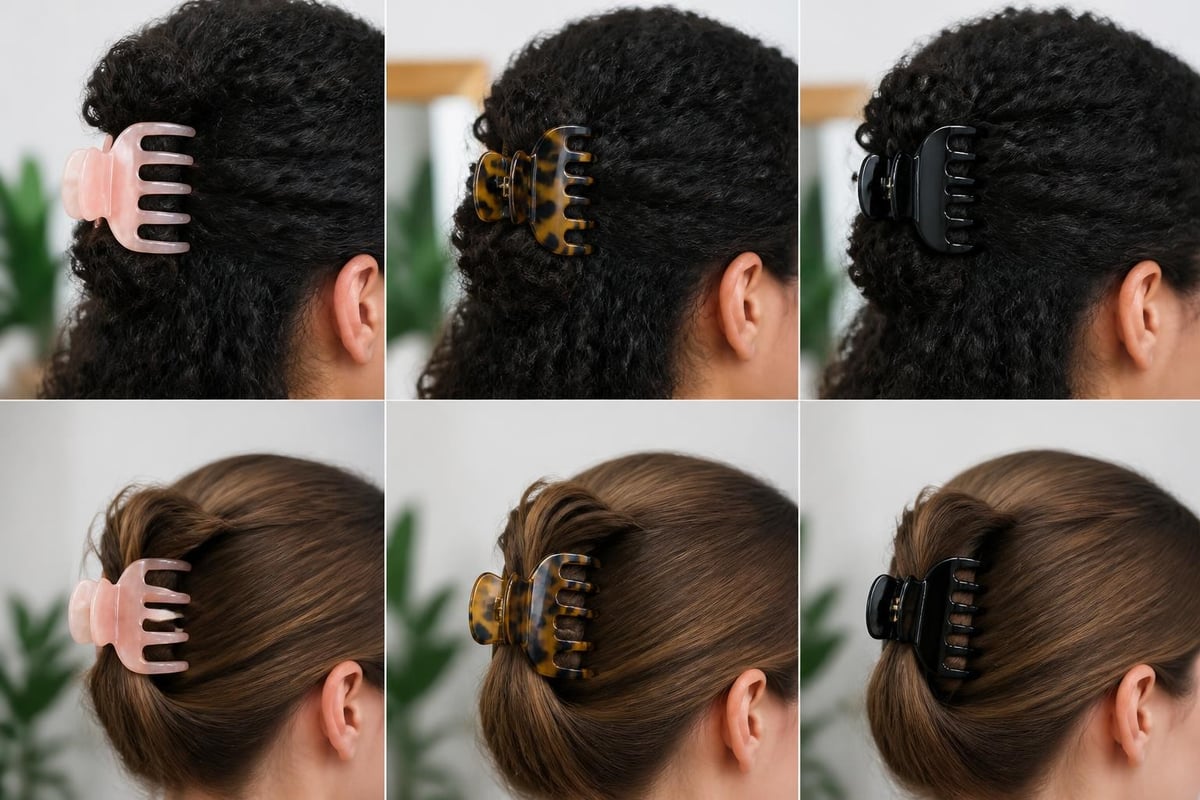
Size follows two variables, not one. Density decides how far the jaw has to close, and length decides how much clip you need to carry the section. For thin hair at shoulder length or shorter, the best claw clips measure between 2 to 3.5 inches, which gives adequate grip surface without excessive weight, and anything larger slips because the jaw cannot close far enough on a small amount of hair. Past shoulder length the rule turns over: you size up to 4 to 5.3 inches so one clip can carry the whole section, provided that clip stays light and spreads the hair across a wide jaw span.
Here is how the sizes break down:
- Small clips (2-3 inches): Best for half-up styles, front sections, and securing bangs or face-framing layers
- Medium clips (3-3.5 inches): Optimal for full updos, ponytails, and buns when working with shoulder-length to long thin hair
- Large clips (4 to 5.3 inches): The right choice on fine hair at mid-back length or longer, and only when the clip is under 15 grams and spreads the section across 12 or more teeth, which is exactly why the 5.3 inch butterfly claw below is my pick for long fine hair rather than an exception to the rule
When selecting from salon styling essentials, I guide thin-haired clients toward the smaller end of the spectrum up to shoulder length, and toward a lightweight wide-span claw beyond it. The physics simply work better.
If you are not sure which shape your hair responds to, that is the question I would settle first, because on fine hair the holding shape matters more than half an inch of size. The fastest way to find out is to try more than one shape, which is why the Vintage Christmas claw clip is sold as a single clip in a choice of three shapes, square, squiggly and clamshell, rather than as a fixed set. Each one sits in the 2 to 3 inch small-to-medium range that suits half-up sections, twists, and fine to medium ponytails rather than a full thick updo, so you can buy the shape you think matches how you wear your hair, or two and compare them. It is one of the picks in our Christmas hair accessories collection. They are cut from cellulose acetate, the plant-derived material made from wood pulp and cotton that I keep steering clients toward over drugstore acrylic or PVC, because it is more durable, it is biodegradable, and in practice the hinge holds its tension longer before it gives out. Each acetate plate is cut individually during production, so the marbled holiday red, green and gold print varies slightly from clip to clip.
Material Selection and Weight Distribution
Not all plastics, resins, or acetates perform equally on fine hair. Material density directly impacts whether a clip stays anchored or migrates throughout the day.
| Material Type | Weight Category | Grip Performance | Breakage Risk | Best Use Case |
|---|---|---|---|---|
| Acetate (thin) | Lightweight | Excellent | Very Low | Daily wear, all-day hold |
| Resin composite | Light-Medium | Very Good | Low | Professional settings, secure styles |
| Heavy plastic | Medium | Moderate | Medium | Short-duration wear only |
| Metal hardware | Heavy | Poor | High | Not recommended for thin hair |
The lightweight acetate clips consistently outperform heavier alternatives because they don't rely on weight for stability. Instead, they achieve hold through tooth design and jaw tension calibration.
Tooth Design and Spacing Architecture
The tooth configuration on a claw clip determines its fundamental ability to grip fine strands. Selecting the right tooth design for your hair density prevents both slippage and damage.
Fine-tooth design features teeth spaced 2-3mm apart, creating multiple grip points per square centimeter. This distributes tension across more strands, reducing per-strand stress while increasing overall hold security.
Wide-tooth design spaces teeth 5mm or more apart, suitable for thick or curly hair but completely inadequate for thin hair. The teeth simply slide past fine strands without engaging.
Curved vs. straight teeth: Curved teeth with a slight inward angle create a mechanical lock that straight teeth cannot match. The curvature catches strands at multiple angles, preventing the vertical slide that causes most clip failures.
What I Recommend From the Chair
Here is the protocol I use for matching clients with claw clips that actually perform. This isn't about brand loyalty. It's about engineering that aligns with strand physics.
Top Features Checklist
When evaluating any claw clip for thin hair, I verify these specifications:
- Total clip weight under 15 grams
- Tooth count minimum of 12 per jaw
- Tooth spacing no wider than 3mm
- Jaw opening width appropriate to your hair volume
- Spring tension calibrated for fine strands (not overly aggressive)
The spring tension point trips up many manufacturers. They assume more tension equals better hold, but on thin hair, excessive jaw pressure creates stress fractures in the hair shaft. Moderate, consistent tension outperforms aggressive compression every time.
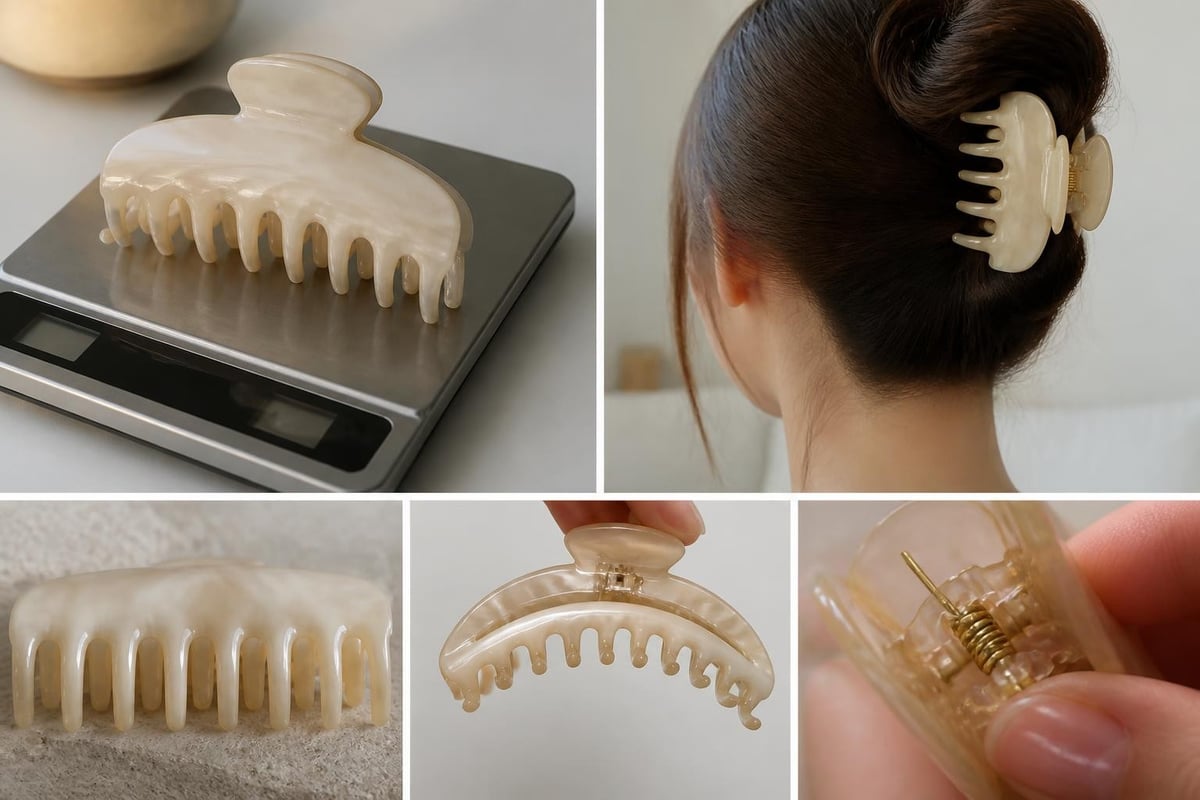
I also pay attention to edge finishing. Sharp or rough edges on teeth can abrade the hair cuticle during insertion and removal. The best options feature smoothed, polished edges that glide through hair without catching or tearing.
Matching Clip Style to Hair Length
Your hair length significantly influences which clip architecture works best. Match size and shape to your specific length and density combination and your styling options open right up. I break the same logic down style by style in my guide to claw clip hairstyles for fine hair.
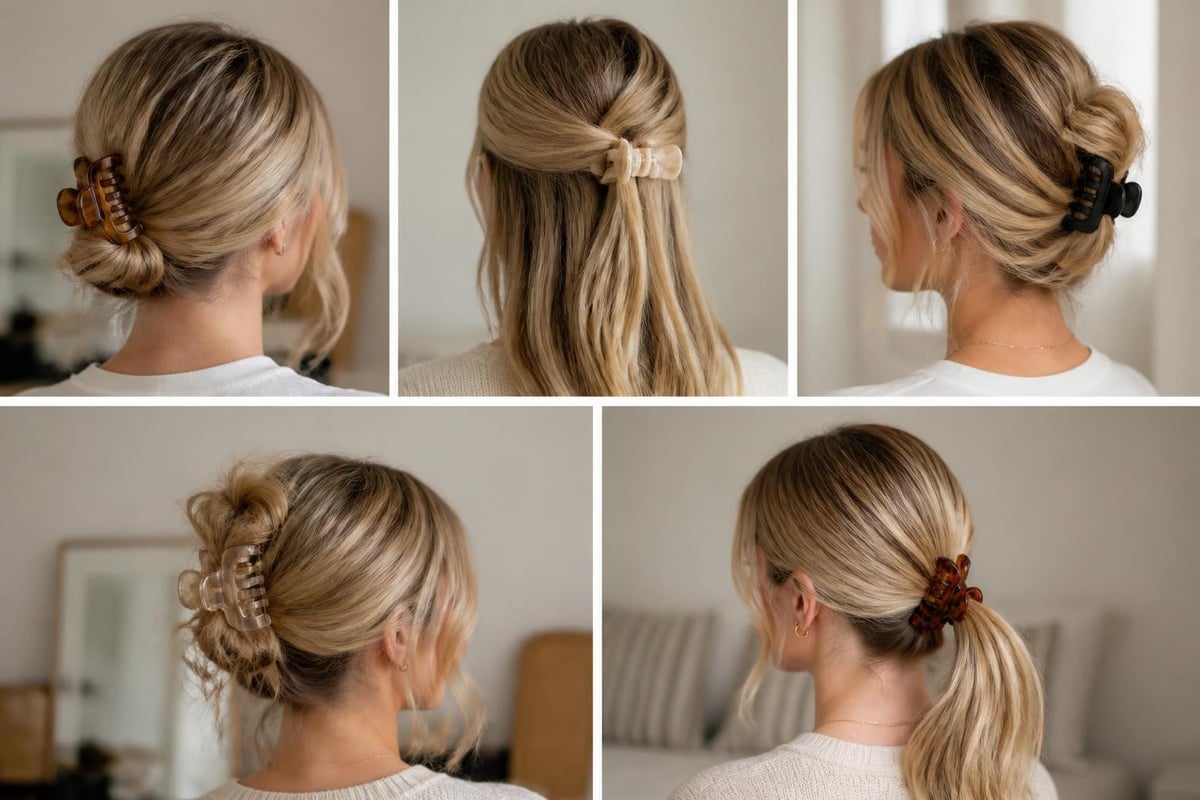
Short to chin-length thin hair: Mini claw clips (2-2.5 inches) work best for half-up styles and side sweeps. Full updos aren't structurally viable at this length regardless of clip quality.
Shoulder-length thin hair: Medium clips (3-3.5 inches) handle low buns, twisted updos, and secure ponytails. This length provides enough hair mass to distribute clip weight effectively.
Long thin hair: You have two good options. Size up to a lightweight 4 to 5.3 inch claw with a wide jaw span so one clip carries the whole section, or use two smaller clips for very secure updos. What fails is one large heavy clip. The two-clip approach distributes weight and tension more evenly, and a wide-span lightweight claw does the same job with a single clip.
One caveat I add at my chair almost every week: length and weight are two different variables. A longer claw with a wider jaw span is not automatically a heavy claw, and on long fine hair it often outperforms a small one, because it spreads that same modest amount of hair across many more teeth. That is why I keep the 5.3 inch gradient butterfly claw in rotation for fine-haired clients who want one clip instead of two. Because it grips across that wider span, you never have to crank it shut, so it does not press the hard dent into fine strands that a small clip clamped tight always leaves. It is also light enough that it will not creep down under its own weight when there is not much hair to anchor it.
The Role of Hair Texture in Clip Selection
Thin hair isn't monolithic. You can have thin straight hair, thin wavy hair, or thin curly hair. Each texture variant requires slight adjustments to the base recommendations. Knowing which one you have, and building a hair care routine around it, is what makes these adjustments matter.
Thin straight hair offers the least natural grip. The smooth cuticle means strands slide past each other easily. You need maximum tooth count and potentially a very slight texture coating on the clip teeth.
Thin wavy hair provides moderate natural grip from the wave pattern creating friction points. Standard fine-tooth designs work well without modification.
Thin curly hair offers the most natural grip but also the highest fragility. You need gentler spring tension and wider jaw opening to accommodate the curl volume without crushing the pattern.
Avoiding Common Mistakes
I've seen clients damage their thin hair through well-intentioned but misguided clip usage. These errors show up repeatedly, and they're all preventable.
Mistake one: Using clips that are too large because "they look better." Aesthetics matter, but not at the cost of hair health. An oversized clip creates point-loading stress that breaks strands.
Mistake two: Applying clips to wet or damp hair. Thin hair is most fragile when wet. The tension from a claw clip on wet strands can cause permanent stretching damage to the cortex.
Mistake three: Leaving clips in the same position for multiple days. This creates constant tension on the same strands, leading to breakage at the clip line. Rotate your clip placement daily.
Mistake four: Yanking clips out without opening the jaw fully. Always open the clip completely before removal to prevent tearing and breakage.
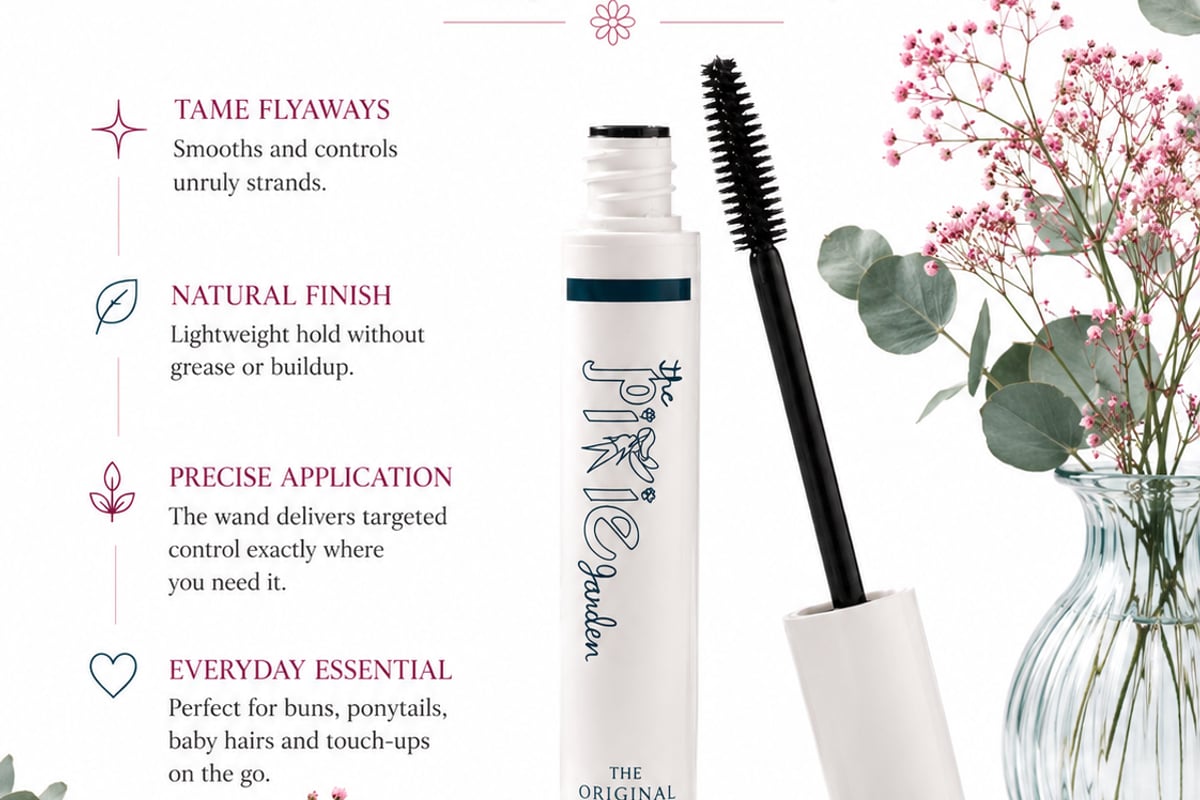
For clients dealing with both thin hair and flyaway concerns, I often recommend pairing the right claw clip with targeted finishing products. When you combine a properly sized clip with smart styling products, you achieve both security and polish. That's where my Hair Finishing Stick becomes invaluable-it tames those baby hairs and flyaways around your clip without adding weight or stiffness that could compromise your style.
Professional Results at Home
The gap between salon results and home styling often comes down to technique rather than skill. These methods work regardless of which specific clips you choose, though they perform best with properly sized options.
Application Technique Protocol
- Start with completely dry hair styled to your desired smoothness or texture
- Gather the section you want to secure, using fingers to compress the hair gently
- Position the clip at a 45-degree angle to the scalp rather than perpendicular
- Open the jaw fully before bringing it to the hair
- Close gradually while maintaining the angle, allowing teeth to engage progressively
- Test security by gently tugging the clip-it should resist without pulling hair
The 45-degree angle makes an enormous difference. It creates a mechanical advantage that perpendicular placement cannot match, distributing the hold across more hair and preventing the slide-down that thin-haired clients commonly experience.
Comparison Shopping: What to Look For
When you're comparing options online or in stores, manufacturer descriptions often emphasize aesthetics over engineering. I've developed a quick evaluation framework that cuts through marketing language to identify clips that will actually perform on thin hair.
| Evaluation Factor | Red Flag | Green Flag |
|---|---|---|
| Product weight | No weight listed or "sturdy construction" emphasized | Specific weight under 15g mentioned |
| Size description | "One size fits all" or "universal fit" | Specific measurements in inches or cm |
| Tooth design | No mention of teeth or "strong grip" claims | "Fine teeth" or tooth count specified |
| Material | Generic "plastic" or heavy metals | Acetate, lightweight resin, or specific polymer named |
| Reviews | Complaints about slipping from fine-haired users | Positive feedback specifically from thin-haired reviewers |
Pay particular attention to review sections. When thin-haired users report success, that data point outweighs generic five-star ratings from users with different hair types. Look for phrases like "finally stays in my fine hair" or "doesn't slip on my thin hair."
If you would rather skip the spec-sheet hunt, the clips I keep in the shop are already filtered for this. The Gold Metallic Mini Claw Clip Set is what I reach for on thin hair when the goal is a half-up that stays put without a heavy jaw dragging on it.
Color and Finish Considerations
While functionality drives my primary recommendations, aesthetics matter in daily wear. The best claw clips for thin hair come in finishes that either blend with your hair color or provide intentional contrast as a style element.
Tortoiseshell and neutral tones work universally, blending with most hair colors while providing subtle visual interest. These finishes hide minor wear and tear better than solid colors.
Matte finishes reflect less light, making the clip appear slightly smaller and less prominent. This can be advantageous when you want the hairstyle to take visual priority over the accessory.
Glossy finishes catch light and become statement pieces. Choose these when the clip serves as both functional tool and intentional accessory element in your overall look.
Metallic accents add weight and should be minimal on thin hair. A small metal spring mechanism is fine, but avoid clips with heavy metal decorative elements that compromise the lightweight advantage.
At The Pixie Garden, we offer handcrafted options that combine appropriate sizing for thin hair with distinctive aesthetic elements that standard mass-produced clips cannot replicate.
Seasonal and Activity Adjustments
Your clip needs may shift based on weather conditions and activity level. I've noticed distinct seasonal patterns in what works best for my thin-haired clients throughout the year.
Summer and humidity: Moisture in the air can reduce friction between strands. You may need to size down slightly or choose clips with more aggressive tooth engagement during humid months.
Winter and static: Dry air increases static, which can actually help with grip. However, static also makes hair more brittle. Opt for clips with smoother edges to minimize breakage during this season.
Athletic activities: If you're securing hair for workouts, movement and sweat factor into your equation. Choose the smallest clip that provides adequate hold-excess size and weight become liabilities during dynamic movement.
Professional environments: When you need all-day security in a static environment, your standard recommendations apply without modification. Focus on comfort since the clip will remain in place for extended periods.
Building Your Clip Collection
Rather than accumulating random clips, I recommend a strategic approach that gives you functional versatility without redundancy. Most thin-haired clients need just three to five well-chosen clips to handle all their styling situations.
Essential Collection Framework
- Two everyday clips (3-inch acetate, fine teeth, neutral colors): Your workhorses for daily styling
- One small clip (2-2.5 inches): For half-up styles, securing bangs, or accent styling
- One statement clip (3 inches, distinctive color or handcrafted detail): For occasions when the clip doubles as jewelry
- One backup (identical to your favorite everyday clip): Because the clip you love most will eventually break
This five-clip collection costs less than most single salon visits but delivers years of reliable performance when you choose quality construction.
For the small clip and the accent slot on that list, I like something with a little personality, since it is only ever holding one section. The strawberry accent claw is one of my selected picks for that job. I reach for it on a twisted side section, a half-up crown, or pinning the hair back off one temple, not for gathering everything at once. Asking a mini clip to hold a whole head of fine hair is the fastest way to have it slip loose by lunch.
The curated selection at The Pixie Garden reflects this philosophy-each piece serves a specific functional purpose while meeting aesthetic standards worthy of daily wear.
Care and Maintenance Protocols
Even the best claw clips for thin hair require minimal maintenance to preserve their performance characteristics. I've developed a simple care routine that extends clip lifespan significantly.
Weekly wipe-down: Wipe the teeth with a soft damp cloth to lift the oil, product residue, and debris that accumulates between them. This prevents buildup that reduces grip effectiveness. Wash the clips properly in warm water with a drop of gentle shampoo once a month, or every two weeks if you use heavy styling products.
Monthly inspection: Check spring tension, tooth integrity, and hinge function. Replace any clip showing weakness before it fails during wear.
Proper storage: Keep clips in a drawer or container where teeth won't catch on fabric or other items. Tossing clips loose in a bag damages teeth and weakens springs.
Rotation practice: Don't use the same clip every single day. Rotation allows the spring mechanism to fully recover between uses, maintaining consistent tension over time.
Frequently Asked Questions
How do I prevent claw clips from sliding out of my thin hair?
Match the size to your length: 2 to 3.5 inches for shoulder-length and shorter hair, and 4 to 5.3 inches for mid-back length or longer, so one clip can carry the whole section instead of two. At either size, choose a fine-tooth design (12+ teeth per jaw) and lightweight acetate or equally light construction. Apply at a 45-degree angle rather than perpendicular to your scalp, which creates mechanical advantage for superior hold. Ensure your hair is completely dry before application, as thin hair loses significant grip strength when damp or wet, causing even properly sized clips to slip.
Can I use the same claw clips for thick and thin hair?
No, clips engineered for thick hair feature wide tooth spacing and heavy construction that slides right through fine strands without gripping. You need clips specifically designed with fine-tooth architecture, lighter materials, and appropriate sizing for thin hair's reduced density and diameter. Using thick-hair clips on thin hair guarantees slippage and potential breakage from inadequate grip distribution across your limited strand count.
What's the best claw clip size for thin shoulder-length hair?
A 3 to 3.5-inch clip provides optimal performance for thin shoulder-length hair, offering adequate surface area for secure hold without excessive weight. This size handles full updos, low buns, and twisted styles effectively while distributing tension appropriately across your hair volume. Smaller clips work for half-up styles, while larger options typically slide or create damaging pressure points on thin hair at this length.
Do expensive claw clips work better on thin hair than budget options?
Price correlates with performance only when higher cost reflects superior engineering-specifically lightweight materials, precision tooth spacing, and calibrated spring tension. Many expensive clips prioritize decorative elements over functional design for thin hair. Focus on technical specifications rather than price point: acetate construction, fine-tooth design, appropriate sizing, and weight under 15 grams regardless of whether the clip costs five dollars or fifty.
Finding the best claw clips for thin hair comes down to understanding the engineering behind grip security, weight distribution, and tooth design rather than chasing trending brands or aesthetics alone. When you choose clips that respect your hair's unique structural needs, you achieve reliable all-day hold without damage or constant readjustment. At The Pixie Garden, I've curated accessories that deliver professional results because I test everything from the perspective of a licensed cosmetologist who works with thin hair daily-if it wouldn't work for my clients, it doesn't make the cut.
