

Rice Shampoo and Conditioner: Bars vs. Liquid Comparison
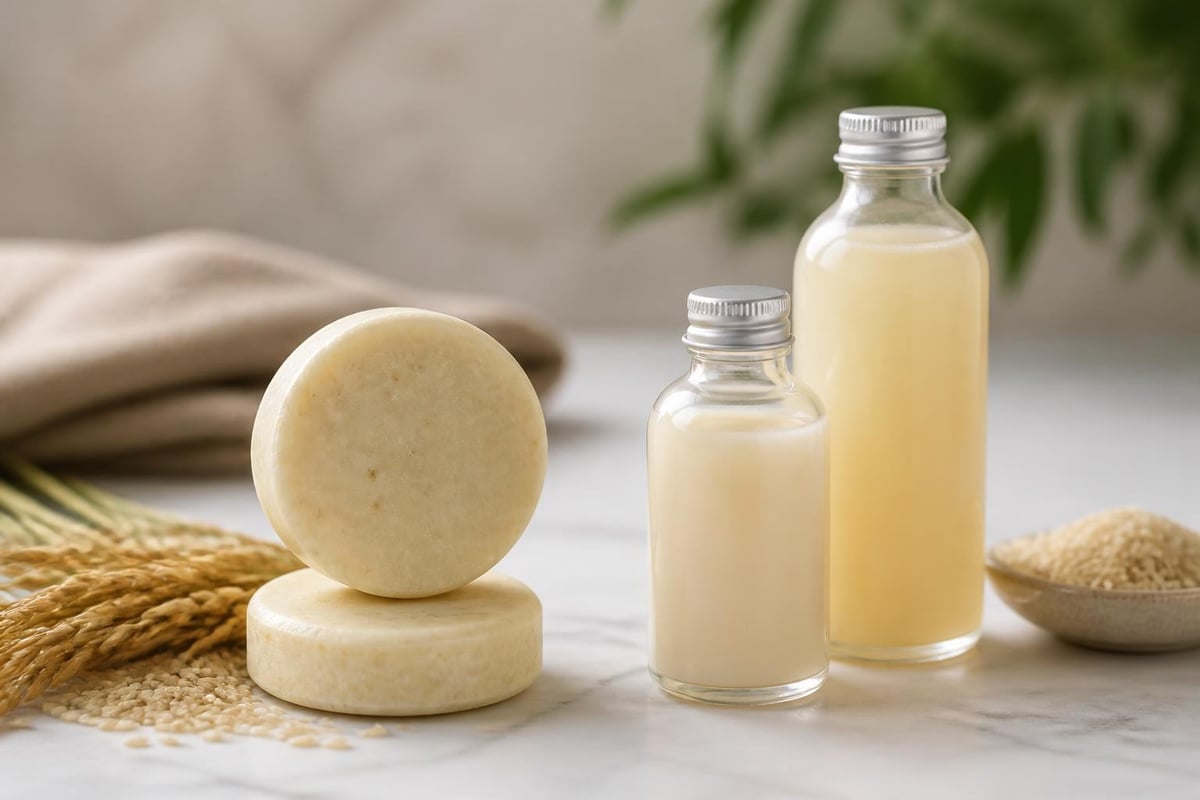
Delena MarklandI switched my salon recommendation to rice shampoo and conditioner bars after running the numbers on active ingredient concentration. Rice water shampoo bars deliver more active rice water per wash than liquid shampoo because liquids are 70-80% water before any active ingredient. That difference matters when you're paying for results, not just packaging. After years of working with clients who wanted the benefits of rice water without the DIY kitchen prep, I found that bars consistently outperformed their liquid counterparts in both concentration and cost per use.
Why Rice Water Concentration Matters More Than Formula Type
The active components in rice water that benefit your hair are inositol, amino acids, vitamins B and E, and minerals like zinc and magnesium. When you dilute these nutrients in a liquid shampoo base that's already 70-80% water, you're reducing the concentration of everything that actually works. Research from the Cleveland Clinic acknowledges that rice water contains beneficial nutrients, though the mechanism of action is still being studied.
Bar formulations compress these active ingredients into a solid form. There's no water weight until you activate the bar under your shower stream. This means every gram of product you use contains a higher percentage of rice-derived proteins and vitamins.
The Inositol Concentration Difference
Inositol is the carbohydrate compound in rice water that penetrates the hair shaft and remains even after rinsing. It strengthens hair from the inside and protects against future damage.
Concentration comparison:
| Product Type | Water Content | Inositol Delivery | Active Ingredient Density |
|---|---|---|---|
| Liquid Shampoo | 70-80% | Diluted in base formula | Low to moderate |
| Shampoo Bar | 0% (until wet) | Concentrated solid form | High |
| DIY Rice Water | 100% water-based | Variable, unstable | Inconsistent |
The bars I recommend at The Pixie Garden use Rice Tein Protein. TRI-K, the company that makes the ingredient, claims a 20% increase in hair volume after five washes. I have not found that study published anywhere I can read it, so I treat the number as a manufacturer claim rather than as independent evidence. When you buy a liquid formula, you're often paying for water and preservatives that dilute that active concentration.
How Long Each Format Actually Lasts
I track product longevity because my clients ask me constantly whether bars are actually economical. The answer is yes, but only if you store them correctly.
A standard liquid shampoo bottle contains 8-12 ounces and lasts the average person 4-6 weeks with daily washing. A rice shampoo and conditioner bar weighs 2-3 ounces but lasts 8-12 weeks under the same usage pattern. The difference comes down to control and waste.
Usage Breakdown by Format
With liquid shampoo, you dispense more than you need. The bottle design encourages overpouring. I've watched clients use 3-4 pumps when 1-2 would suffice. There's also residual product left in the bottle that you can never fully extract.
Bars give you direct control. You create lather by rubbing the bar between your hands or directly on your hair. You stop when you have enough. There's no overpouring, no residual waste in packaging, and no temptation to use extra because "the bottle's almost empty anyway."
Cost per wash comparison:
- Liquid rice water shampoo: $0.35-$0.60 per wash (assuming $14-18 for 12 oz, 30-40 washes)
- Rice shampoo bar: $0.15-$0.25 per wash (assuming $12-15 per bar, 60-80 washes)
- DIY rice water: $0.02-$0.05 per batch (but requires prep time, refrigeration, and has a 7-day shelf life)
The bar format wins on longevity if you store it properly. Leave it in a puddle of water, and it will dissolve in about four weeks. Use a bamboo holder that drains completely between uses, and you'll get the full 80 washes.
The Waste Factor: Packaging and Product Loss
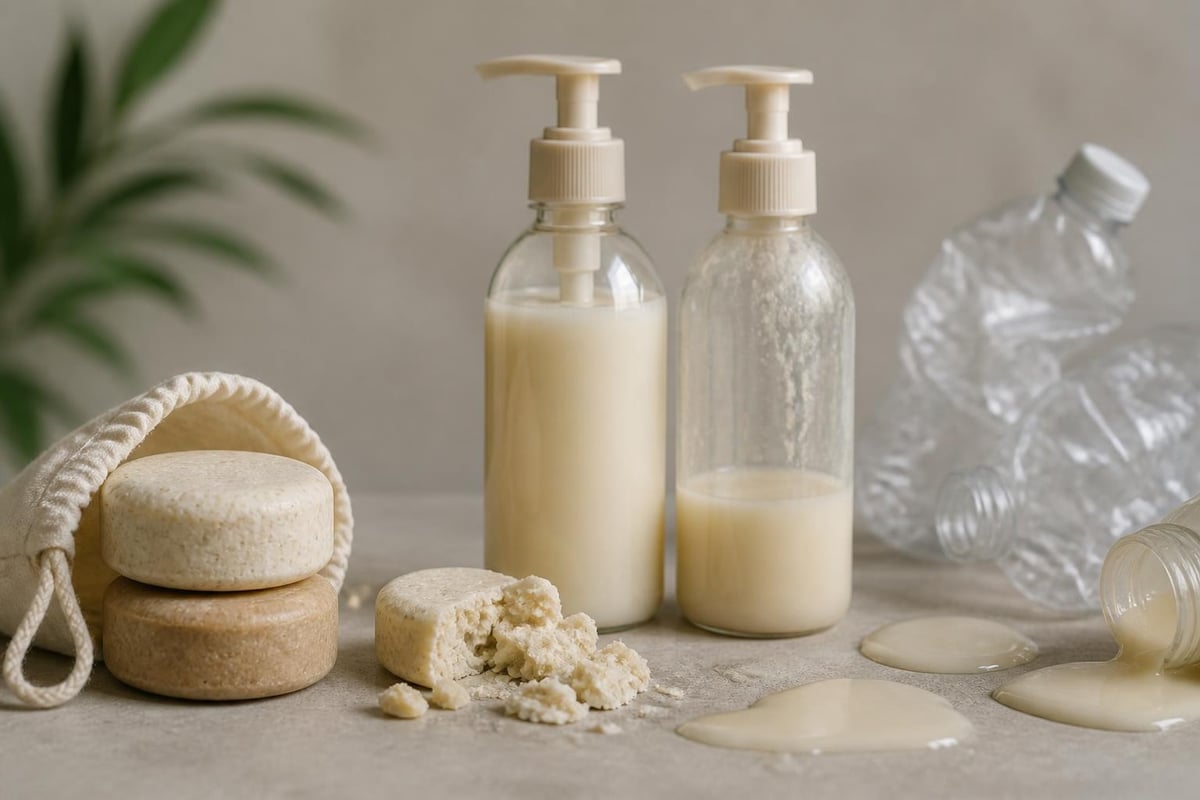
I started paying attention to packaging waste when I realized how many empty shampoo bottles my salon was throwing out monthly. Liquid rice shampoo and conditioner comes in plastic bottles that require recycling programs most people don't use consistently. The bottles themselves add 2-4 ounces to the product weight, which increases shipping emissions and costs.
Bars typically come in minimal cardboard packaging or paper wrapping. Some brands use compostable materials. The environmental impact of beauty products is getting more attention, and bars address several sustainability concerns at once: no bottle, no water weight to ship, and no pump left over at the end.
Product Loss During Application
Liquid formulas lose product in three ways: overpouring, rinsing away before it works, and residual waste in the bottle.
Bars minimize loss because you control exactly how much you activate. The product goes directly where you need it. If you're someone who struggles with managing flyaways and achieving sleek hair, the precision of bar application helps you target your scalp without coating lengths that don't need as much cleansing.
Why I Switched My Salon Recommendation to Bars
Liquid rice water treatments tend to deliver inconsistent results. When I analyzed the products more carefully, I realized the inconsistency came from concentration variation between brands and improper usage.
Bars solved both problems. The concentration is consistent because there's no water filler. The usage is intuitive because you can see and feel exactly how much lather you're creating. That is why bars are what I recommend at The Pixie Garden.
TRI-K claims a volume increase for Rice Tein Protein, with the caveat that the claim is the supplier's own. The amino acids and proteins strengthen the hair cuticle, which creates the appearance of thicker, fuller hair even if new growth hasn't occurred yet.
The Two Brands I Recommend and Why
I carry two rice shampoo and conditioner bar brands at The Pixie Garden, and I recommend them for different client needs.
KITSCH Rice Water Shampoo and Conditioner Bar Set
This is my starter recommendation for clients who are new to bars or who want an affordable entry point to rice water hair care. The set includes both shampoo and conditioner bars, so you get the complete routine in one purchase.
Best for:
- First-time bar users who want to test the format
- Clients with normal to dry hair who need general strengthening
- Anyone looking for a budget-friendly rice water option that still delivers results
The KITSCH bars contain rice water extract and work well for most hair types. They're not customized by scalp type, but they cover the fundamentals effectively. I recommend these to clients who aren't dealing with specific scalp issues like excess oil or sensitivity.
The Rice Water Shampoo and Conditioner Bar set uses that Rice Tein Protein I mentioned earlier. As I said above, the 20% volume increase after five washes is TRI-K's own manufacturer claim rather than independent evidence, so that is exactly how I present it to clients who are skeptical about natural hair care claims.
Viori Bars: Customized by Hair Type
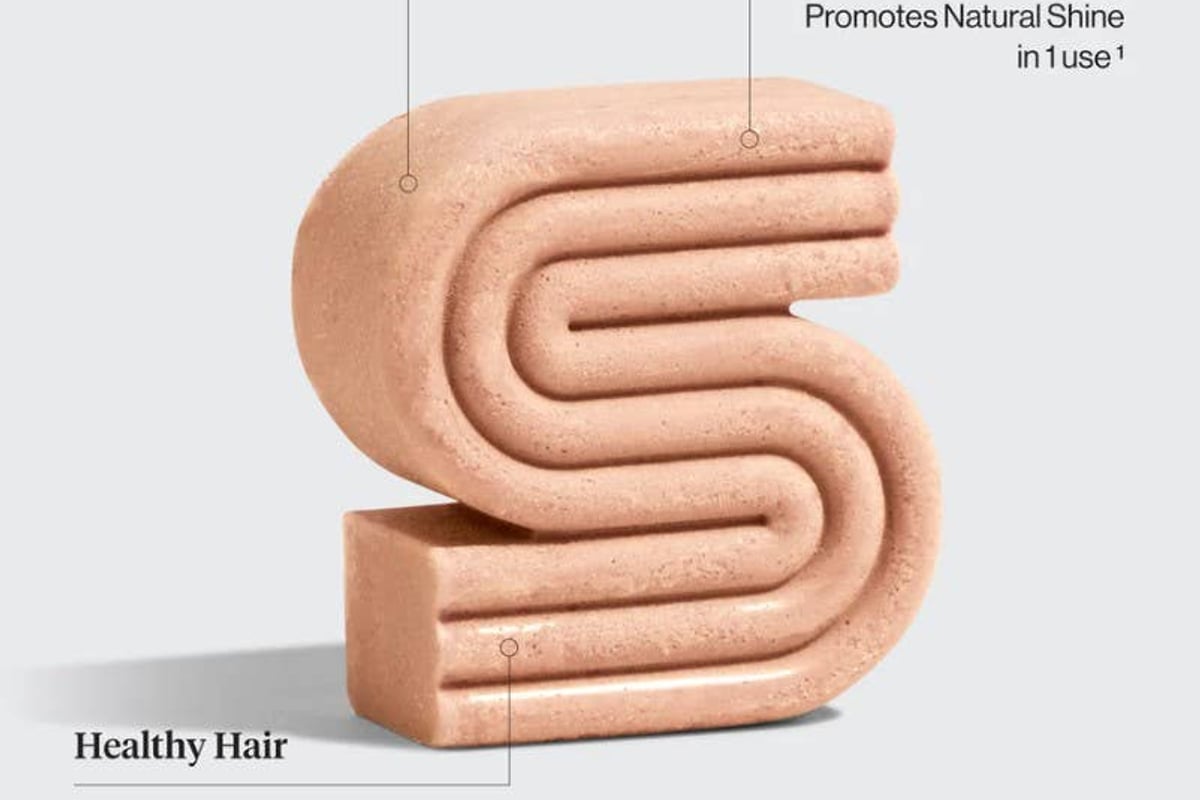
For clients who want to match their rice shampoo and conditioner to their specific hair and scalp needs, I recommend Viori bars. These are formulated with Longsheng rice water, which comes from the Red Yao women in China who are known for their long, healthy hair well into old age.
Viori options I carry:
| Bar Type | Best For | Key Benefits |
|---|---|---|
| Hidden Waterfall | All hair types | Balanced cleansing, universal formula, safe for color-treated hair |
| Tea Tree Mint Shampoo | Oily scalps | Removes excess surface oil, refreshing tingle, clarifying |
| Citrus Yao Conditioner | Oil control needs | Lightweight conditioning, balances moisture without heaviness |
I guide clients toward specific Viori bars based on their scalp type rather than their hair type. Your scalp determines how often you need to wash and what kind of cleansing power you need. Your hair type (fine, thick, curly, straight) determines conditioning needs.
If you have an oily scalp, you need the Tea Tree Mint shampoo for oil control, but you might still need a rich conditioner on your ends if your hair is long or chemically treated. That's where the customization makes a real difference.
The men in your house can run the exact same Longsheng rice water base without raiding your bar. After over 25 years behind the chair, I have lost count of the husbands who quietly borrowed a floral shampoo bar, so I keep the Men's Shampoo Bar 3-Pack in Citron and Ginger stocked for exactly that reason. Same rice water science, a sharper citron and ginger scent, and three bars is enough to keep one man washing for most of a year.
The Longsheng Rice Water Treatment Ritual
Beyond daily shampoo and conditioner bars, I also recommend the intensive Longsheng Rice Water Treatment for clients dealing with significant breakage or thinning. This is a separate treatment you use weekly or bi-weekly, not a replacement for your regular washing routine.
The treatment is more concentrated than the daily-use bars. You apply it after shampooing, leave it on for 5-10 minutes, then rinse. The proteins and amino acids need that contact time to penetrate the hair shaft. Rinsing at the two-minute mark will not do it.
I've seen the best results when clients combine daily rice water bars with the weekly intensive treatment. That layered approach gives your hair consistent protein support from the bars and a deeper repair boost from the treatment.
How to Store Bars So They Last Twice as Long
This is the most important tip I give every client who buys bars: store them on a bamboo holder between uses. If you don't, your bars will dissolve in the shower moisture, and you'll think bars don't last as long as liquid. You'll be wrong, but your experience will confirm that belief.
Bars need to dry completely between uses. A bamboo holder has drainage slats that allow air circulation on all sides. The bar dries in 2-4 hours instead of sitting in a puddle for 24 hours. The slatted bamboo dish I keep beside my shampoo bowl is the exact one I send clients home with, because it lifts the bar high enough that water runs off instead of pooling underneath it.
Storage Tips That Extend Bar Life
- Use a bamboo or wooden holder with drainage slats, not a plastic soap dish
- Keep the bar out of direct water spray when you're not using it
- If you travel, let the bar dry completely, then wrap it in a washcloth or store it in a vented container
- Don't store bars in enclosed shower caddies where moisture accumulates
For gym bags and weekend trips I hand clients a draining mesh pouch instead, either the black shower pouch that lathers the bar right through the weave or the same pouch in red, because a damp bar zipped into a plastic baggie comes out soft and smeared every single time.
For clients who want to understand how rice water specifically thickens hair, I explain that consistency matters more than any single application. If your bar dissolves too quickly because of poor storage, you won't use it long enough to see the volume and strength benefits that develop over 3-5 weeks of regular use.
Liquid Rice Shampoo: When It Still Makes Sense
I'm not anti-liquid. There are situations where liquid rice shampoo and conditioner is the better choice, even though I generally prefer bars.
Choose liquid if:
- You share your shower with multiple people who won't respect bar storage rules
- You have severe mobility limitations that make handling bars difficult
- You're using a very specific treatment formula that isn't available in bar form
- You travel frequently and can't ensure bars will dry properly
Some clients have arthritis or grip strength issues that make bars challenging. Others live in humid climates where bars don't dry properly even with good storage. I don't push bars on clients when their circumstances make liquid the practical choice.
Liquid Formula Advantages
Liquid rice water shampoo is easier to distribute through very thick or very long hair. You can pour it directly onto your scalp in sections, which some clients prefer. It's also easier to measure if you're tracking exactly how much product you use.
For clients interested in professional salon styling essentials, I often recommend combining rice water bars for strengthening with targeted liquid treatments for specific styling needs. The formats aren't mutually exclusive.
Combining Rice Water Bars with Other Hair Care Products
Rice shampoo and conditioner bars work well in a layered hair care routine. I recommend them as your foundation for strengthening and volume, then add targeted products for specific styling or treatment needs.
Complementary Products I Recommend
After you've cleansed and conditioned with rice water bars, you might need additional products depending on your hair goals:
- For flyaway control: A finishing stick helps smooth baby hairs and frizz without adding weight or residue
- For scalp health: If you're dealing with thinning or hair loss beyond what strengthening can address, treatments like Procell Microchanneling target follicle health at a deeper level
- For protective styling: Quality hair accessories from The Pixie Garden's curated collection help you create styles that minimize breakage while your rice water routine builds strength
I see the best results when clients use rice water bars for their cleansing and conditioning foundation, then add one or two targeted products rather than trying to solve every hair concern with rice water alone. Rice water offers real benefits, but it works best as one part of a complete hair care approach rather than as the whole plan.
Comparing Results: What to Expect and When
Setting realistic expectations matters. Rice shampoo and conditioner bars aren't magic. They won't transform fine hair into thick hair or repair years of damage in one wash.
Timeline for Visible Results
What to expect, based on TRI-K's supplier claims for Rice Tein Protein:
Week 1-2:
- Hair feels slightly different in texture, often described as "stronger" or "more substantial"
- Improved manageability during styling
- Reduced tangling during washing and drying
Week 3-5:
- Noticeable volume increase, especially at the roots
- Less breakage when brushing or styling
- Shinier appearance due to smoother cuticle layer
Week 6-8:
- Friends and family start commenting that your hair looks thicker or healthier
- Reduced need for styling products because hair holds styles better naturally
- Longer time between trims because ends are less damaged
Week 12+:
- Maximum strengthening benefits as protein accumulates in the hair shaft
- Established routine feels normal, not like a special treatment
- Overall hair health improvement that's visible in photos compared to when you started
I tell clients to commit to three months before deciding whether rice water bars work for them. That gives the proteins and nutrients time to build up on the hair and hold. The improvement is real, but it is maintenance-dependent: it lasts while you keep using the bars and fades once you stop.
Price Comparison: Total Cost of Ownership
When clients ask me whether bars are worth the investment, I break down the total cost of ownership rather than just the upfront price.
Three-Month Supply Cost Analysis
| Format | Product Cost | Washes Provided | Cost Per Wash | Total Packaging Waste |
|---|---|---|---|---|
| Liquid Rice Shampoo + Conditioner | $28-36 (2 bottles) | 30-40 washes | $0.70-1.20 | 2 plastic bottles (8-10 oz total) |
| KITSCH Bar Set | $12-15 (1 set) | 60-80 washes | $0.15-0.25 | Minimal cardboard |
| Viori Shampoo + Conditioner Bars | $22-28 (2 bars) | 60-80 washes | $0.28-0.47 | Paper wrapping |
| DIY Rice Water | $2-5 (rice, prep supplies) | Unlimited batches | $0.02-0.05 per batch | None (but requires 20-30 min prep per batch) |
The upfront cost of quality bars is higher than cheap liquid shampoo, but lower than premium liquid rice water formulas. The cost per wash is significantly lower than any liquid option except DIY rice water.
DIY rice water is the cheapest option if you don't value your time. Homemade rice water requires consistent preparation and has a short shelf life.
Making the Switch: Practical Tips from My Salon Experience
Switching from liquid to rice shampoo and conditioner bars requires a small adjustment period. The transition goes smoothly if you follow a few simple guidelines. When someone is nervous about committing to a full-size bar, I start them on a four-piece bottle-free trial kit so they can feel the lather and the rinse-out on their own hair before they pick a scalp-specific formula.
First Week Adjustment Tips
Expect a different lather. Bars create less foam than liquid shampoo, but foam doesn't equal cleaning power. You're used to associating bubbles with effectiveness because of surfactants in liquid formulas. Bars clean just as well with less dramatic lather.
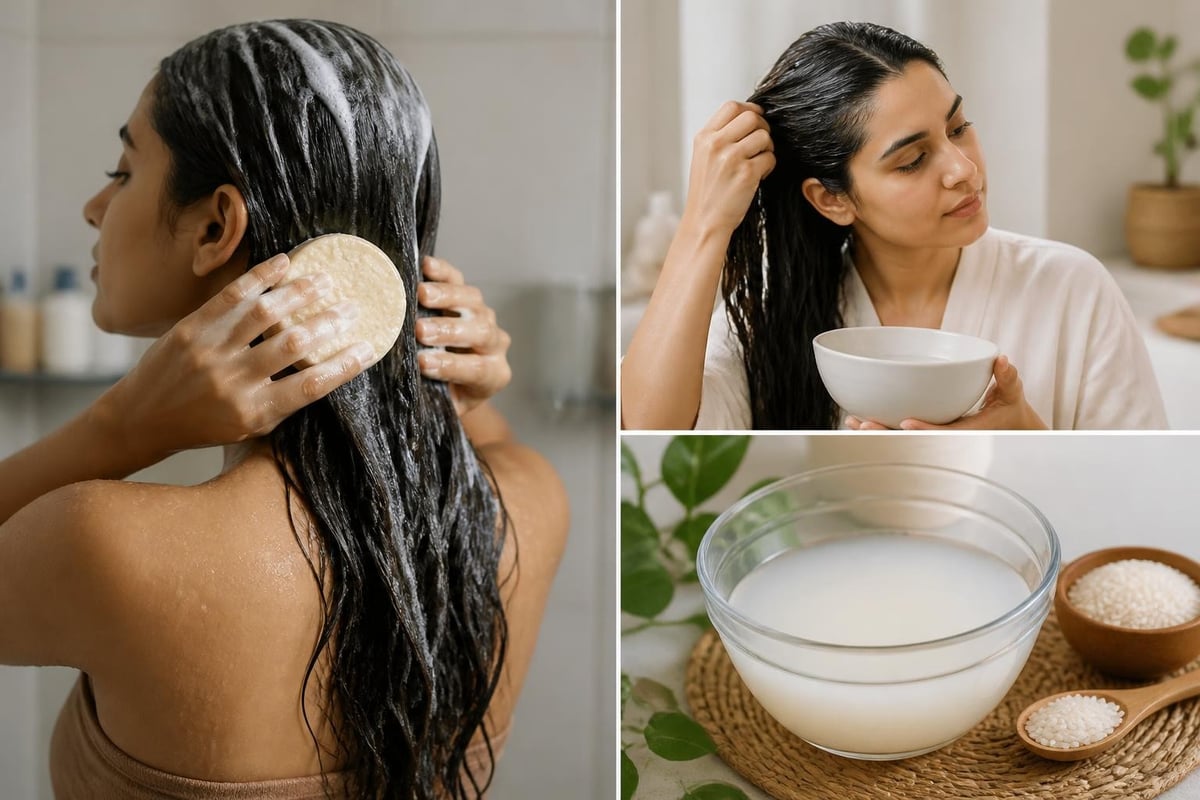
Rub the bar 6-8 times between wet hands to create initial lather, then apply that lather to your scalp. Don't rub the bar directly on your hair for the first few uses until you understand how much product you need.
Focus on your scalp, not your hair. This is true for all shampoo, but especially important with concentrated bars. Your scalp produces oil and collects dirt. Your hair lengths get clean from the shampoo that rinses through them.
Condition from mid-length to ends only. Rice water already strengthens your hair at the roots. You don't need conditioner on your scalp unless you have very dry skin there. Apply the conditioning bar to the bottom two-thirds of your hair length.
Common Mistakes to Avoid
I've seen clients make these mistakes repeatedly, and they all lead to frustration with an otherwise excellent product:
- Using too much product because you're used to liquid amounts
- Not letting the bar dry between uses, which causes premature dissolving
- Expecting immediate transformation instead of giving the proteins 3-5 weeks to build up
- Switching back to liquid shampoo mid-transition, which disrupts the protein accumulation process
If you're interested in managing bad hair days more effectively, rice water bars help create a stronger foundation that makes your hair more manageable on a daily basis. But you have to use them consistently to see those benefits develop.
Rice shampoo and conditioner bars deliver superior concentration and longevity compared to liquid formulas, which is why I switched my salon recommendations to bar-based rice water products. Whether you choose the KITSCH starter set or customize with Viori bars, the key is consistent use with proper storage on a bamboo holder. The Native Essence duo that ships with its own draining holder is what I reach for when a client wants the whole setup in one box, and it is my default gift because nothing is missing on day one. The Pixie Garden offers cosmetologist-curated rice water bars and complete hair care solutions designed to help you achieve stronger, thicker, more manageable hair with professional-quality results at home.
