

How to Get Volume in Fine Hair Without a Perm
Delena MarklandYou do not need a perm to get volume in fine hair. As a licensed cosmetologist and salon owner, I've spent years working with fine-haired clients who come in frustrated because their carefully styled volume falls flat within an hour. The good news is that lasting volume in fine hair comes from three controllable elements: root lift, texture applied at the right density, and strategic part placement. The challenge with fine hair isn't that it can't hold volume. It's that most traditional volumizing methods are designed for medium to thick hair and overwhelm fine strands with weight, product buildup, or techniques that create temporary puff rather than sustainable body.
Understanding Why Fine Hair Goes Flat
Fine hair has a smaller diameter per strand compared to medium or coarse hair types. This physical difference means each strand holds less structural integrity and collapses more easily under its own weight or product load.
When you understand how to get volume in fine hair, you first need to recognize what you're working with. Fine hair typically:
- Lies closer to the scalp due to reduced strand diameter
- Shows oil and product buildup faster because there's less surface area to distribute weight
- Loses root lift quickly when gravity pulls styled sections down
- Benefits from friction and texture rather than slick, smooth products
The most common mistake I see in my chair is clients layering multiple volumizing products thinking more equals better. With fine hair, less product applied strategically outperforms heavy application every time.
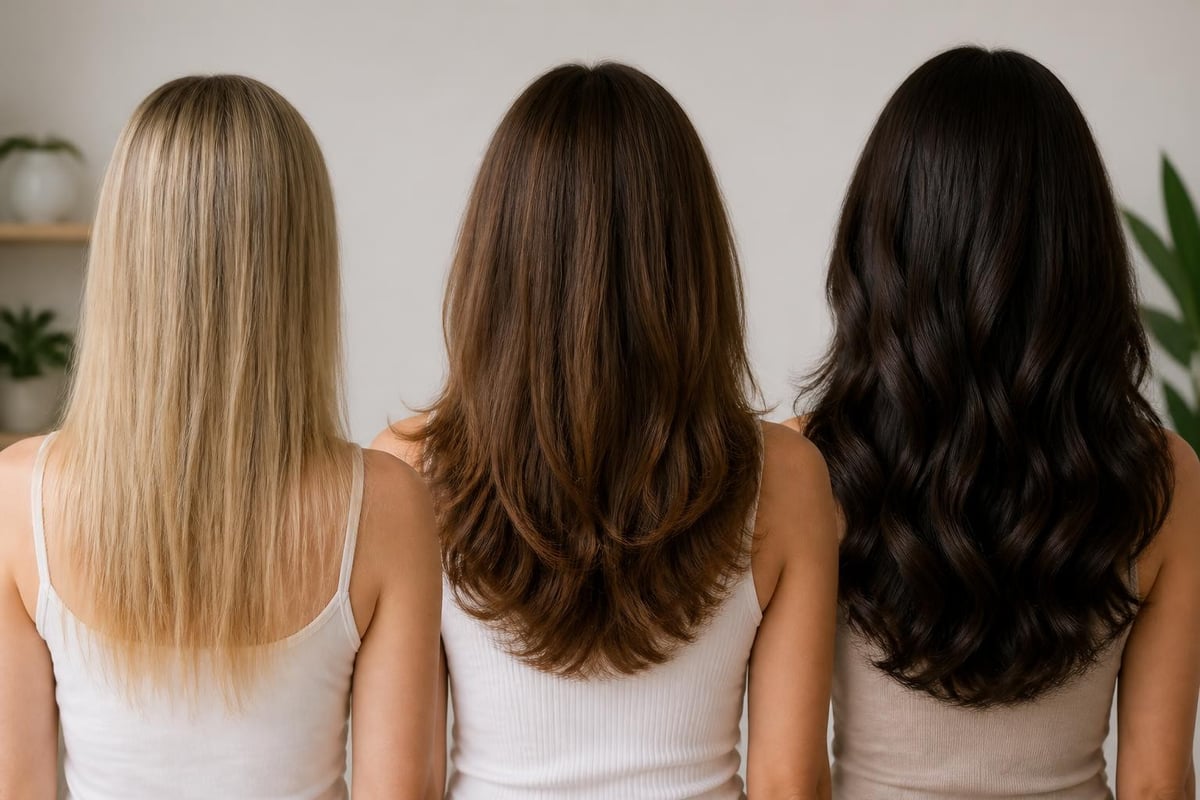
Method One: Texture Powder Worked In by Hand and Set with a Teasing Comb
This is the foundation technique I teach every fine-haired client who asks how to get volume that lasts past lunch. Texture powder creates microscopic friction points along the hair shaft that prevent strands from sliding past each other and collapsing flat.
The Application Process
Start with completely dry hair. Wet or damp application dilutes the powder and creates clumping instead of texture.
- Section your crown area from ear to ear, clipping the top layer up
- Shake a small amount of texture powder (roughly the size of a dime) into your palm
- Rub hands together to distribute evenly across both palms and fingers
- Work fingers through the roots in the sectioned area using a lifting, massaging motion
- Take a texture comb for fine hair and gently backcomb at the root area only
The key distinction here is setting the texture with the comb. The powder creates grip, but the teasing comb locks that texture into position. I use a three-stroke method: slide the comb up to about two inches from the scalp, then push down toward the root three times with gentle pressure.
Realistic hold time: 6-8 hours before you need to refresh. This method survives hats, wind, and moderate humidity when executed properly.
What Makes This Work on Fine Hair
| Element | Function | Why It Matters for Fine Hair |
|---|---|---|
| Dry powder | Absorbs oil, creates friction | Prevents the slick collapse fine hair experiences with creams |
| Hand application | Even distribution, no clumping | Avoids the white patches spray application leaves |
| Teasing comb | Locks texture into root area | Creates structural support that finger-volume alone cannot hold |
Method Two: Root-Lift Blow-Dry Technique
If you want to know how to get volume that looks professionally done, the blow-dry technique matters more than the dryer itself. I've watched clients with premium tools get flat results because they're drying in the wrong direction.
The Upside-Down Method
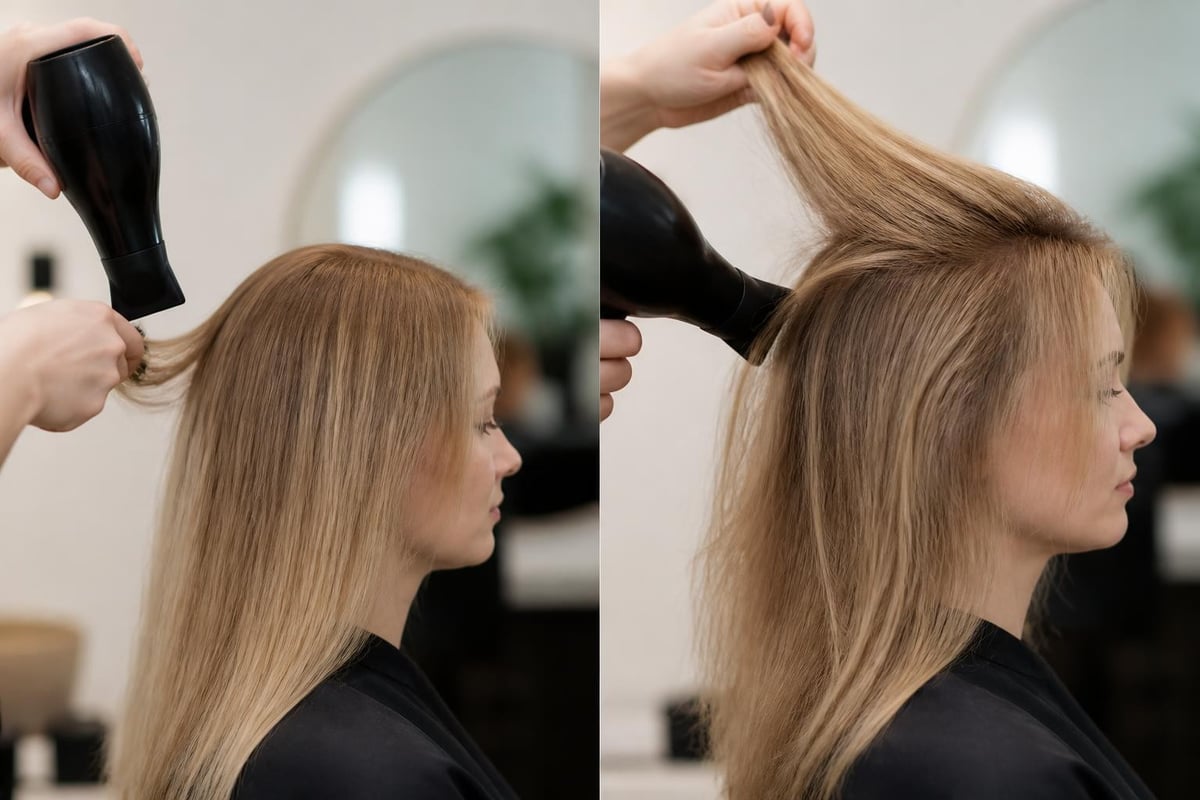
Flip your head upside down and dry the roots first, directing all airflow away from your scalp rather than down the hair shaft. This counterintuitive approach lifts hair away from the head as it dries.
- Use medium heat, high airflow
- Keep the dryer moving constantly to prevent heat damage
- Dry roots to 90% before flipping back upright
- Finish the last 10% of root drying with your head upright, using a round brush to direct sections
Realistic hold time: 4-5 hours as a standalone method, 8-10 hours when combined with texture powder.
The Cool Shot Is Not Optional
Fine hair sets in whatever position it's in when it cools. If you skip the cool shot, you're essentially letting your hair decide its own shape as it gradually cools flat against your head.
After each section is dry on high heat, blast it with the cool setting for 10-15 seconds while still held in the lifted position. This heat-to-cool transition locks the cuticle and sets the volume position.
Method Three: Strategic Part Switching
This is the easiest technique that almost no one uses consistently. Your hair has a natural part line where it's been falling for months or years. That line becomes a permanent valley where volume cannot exist because the hair is trained to lie flat in that groove.
Switching your part by even half an inch creates instant lift because you're forcing hair to stand in a position it hasn't been conditioned to collapse into.
How to Switch Your Part Effectively
- While hair is wet or damp, comb a new part line 0.5 to 1 inch from your natural part
- Use salon styling essentials like clips to hold sections in the new position while drying
- Allow the new part to set for at least 2-3 days before evaluating
- Switch sides every 4-6 weeks to prevent creating a new permanent valley
Realistic hold time: All day, because this is structural positioning rather than product-dependent styling. The volume exists because the hair physically cannot lie in its trained flat position.
I recommend switching your part on a Friday if you work in a professional environment. This gives you the weekend to adjust to how it looks before Monday.
Method Four: Scalp Health as the Foundation
Here's what most volume articles skip: if your scalp is congested with buildup, sebum, or product residue, your hair follicles are partially clogged and cannot stand upright at the root. Learning how to get volume starts before you ever pick up a styling tool.
Fine hair shows scalp buildup faster than thicker hair types because there's less hair overall to hide the oil and residue. A buildup-heavy scalp creates a slick surface that hair slides against, eliminating any chance of root lift.
I recommend a weekly scalp exfoliation using a product like the BOOST scalp scrub, which physically lifts debris from follicle openings and stimulates circulation that supports healthier hair emergence. When follicles are clean and unobstructed, hair naturally stands more upright from the root.
The Scalp-Volume Connection
- Clean follicles allow hair to emerge at a better angle
- Reduced oil at the root prevents weight and collapse
- Improved circulation from gentle exfoliation supports stronger strand growth
- Product removal creates a fresh foundation for styling products to grip
Realistic hold time: This isn't about hold time. It's about creating the baseline condition that allows the other three methods to work. Without scalp health, you're building volume on a slick, unstable foundation.
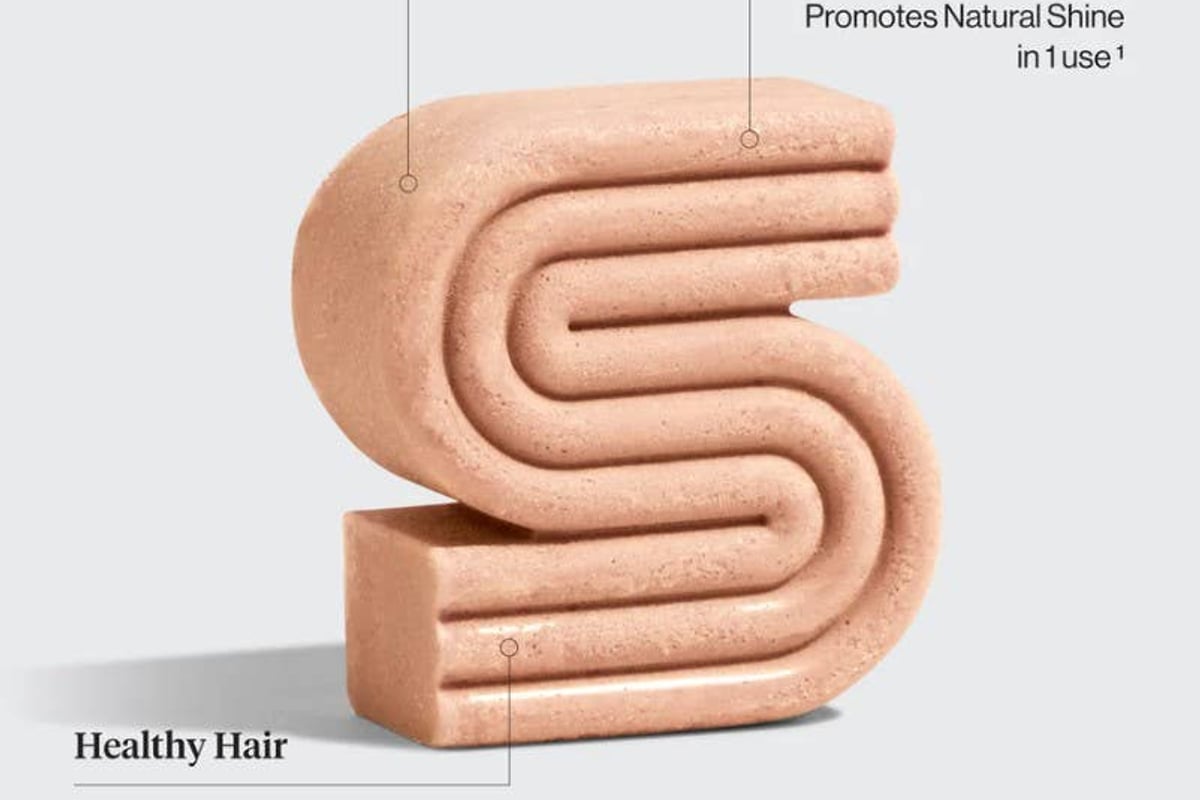
If you're serious about maximizing volume in fine hair, the foundation starts with what you're cleansing with. The Rice Water Shampoo and Conditioner Bar contains Rice Tein Protein, which has been clinically shown to increase hair volume by 20% after five washes in a controlled TRI-K study. That's not marketing language. That's a documented, measurable outcome on a specific ingredient at a specific concentration, which is exactly why I selected it for The Pixie Garden.
What Does NOT Work on Fine Hair
I need to be direct about the methods and products that consistently fail fine-haired clients. Understanding how to get volume means knowing what to avoid as much as what to embrace.
Heavy Mousse
Traditional volumizing mousses are formulated for medium to thick hair and contain too much holding agent and moisture for fine strands. They create initial puff that collapses into stiff, crunchy flatness within two hours. If you've ever wondered why your hair feels like it has product in it but looks completely flat, this is why.
Root Oils and Serums
Any oil-based product applied at the roots of fine hair will create slick, weighted collapse. Save oils for the bottom third of your hair length only, and use them sparingly. According to research on volumizing fine hair, avoiding heavy products at the roots is one of the most consistent recommendations from professional stylists.
Thick Styling Creams
Creams designed to provide hold and definition work by coating the hair shaft. Fine hair doesn't have enough structural mass to support that coating weight. The result is limp, separated strands that look greasy by midday.
Over-Conditioning the Roots
Conditioner is essential for fine hair, but application zone matters. Proper conditioning technique means applying from mid-length to ends only. When conditioner touches your roots, it creates the same slick surface that oils do, eliminating any possibility of lift.
| Product Type | Why It Fails | What to Use Instead |
|---|---|---|
| Heavy mousse | Too much moisture and hold agent | Texture powder or lightweight spray |
| Root oils | Creates weighted slip | Oil only on bottom third of length |
| Thick creams | Coating weight fine hair can't support | Water-based gels or styling sticks |
| Root conditioner | Slick surface prevents lift | Mid-length to ends application only |
Realistic Hold Times and Expectations
When clients ask me how to get volume in fine hair, they often have unrealistic expectations based on Instagram styling videos. Those videos show freshly styled hair under controlled conditions, not hour six of a workday in 70% humidity.
Texture powder method: 6-8 hours before refresh needed
Blow-dry technique alone: 4-5 hours
Combined powder and blow-dry: 8-10 hours
Part switching: All day, but gradual settling over time
Scalp health foundation: Enables all other methods to perform at their maximum
I also want you to understand that "volume" in fine hair looks different than volume in thick hair. You're not going for the big, bouncy fullness of naturally thick hair. You're creating lift at the root and separation between strands that makes fine hair appear fuller and less flat. Professional styling approaches focus on these realistic outcomes rather than transformation into a different hair type.
The Perm Conversation: Cost and Commitment
Since we're discussing how to get volume in fine hair, I need to address perms honestly. A volumizing perm costs between $60 and $150 depending on your location and stylist experience. The process takes 2-3 hours in the chair, and the results last approximately 3-4 months before growing out.
What a Perm Does Well
- Creates permanent bend and texture in straight, resistant fine hair
- Provides consistent daily volume without styling effort
- Works for clients who have zero interest in daily styling routines
- Can be customized with larger rods for subtle volume versus tight curl
What a Perm Requires
- Chemical processing that changes hair structure
- Commitment to the look for the full growth-out period
- Modified hair care routine to maintain curl pattern
- Professional maintenance every 3-4 months if continuing
- Realistic expectations about curl pattern outcomes based on your specific hair texture
I'm not anti-perm. I perform them in my salon for clients who genuinely want the commitment and understand the maintenance. But I also know that most people asking how to get volume are looking for changeable, reversible options they can adjust day to day. That's where the four methods I've outlined excel.
Frequently Asked Questions About Volume in Fine Hair
Does Teasing Thin Hair Damage It?
Gentle teasing with the proper tool does not cause damage. Aggressive teasing with a fine-tooth comb or excessive force can create breakage at the point where you're backcombing. The key is using a comb specifically designed for teasing (with varied tooth spacing) and limiting the teasing zone to the root area only, never mid-length or ends.
I've been teasing fine hair professionally for 25 years. When done correctly with a proper texture comb, the technique creates no more stress than regular brushing.
Powder vs Spray for Fine Hair: Which Works Better?
Powder outperforms spray for fine hair in every metric I track: hold time, natural appearance, and buildability. Spray volumizers contain propellants and liquid carriers that add moisture weight. Even "dry" texture sprays leave a slight dampness that fine hair cannot support without going limp.
Powder applied by hand allows you to control exact placement and density. You can add more where needed without oversaturating areas that need less. Volumizing product selection consistently recommends powder formats for fine and thin hair types specifically because of this control factor.
Why Does Fine Hair Go Flat So Quickly?
Fine hair goes flat quickly because of three physical realities: smaller strand diameter means less structural integrity, higher surface-to-weight ratio means styling products have outsized impact, and natural scalp oils distribute faster down fine strands compared to thick hair. Understanding how to get volume in fine hair means working with these realities rather than fighting them.
You're not doing anything wrong if your volume falls by afternoon. You're experiencing normal fine-hair physics. The solution is choosing methods that account for this natural settling and building in refresh strategies.
Building Your Personal Volume Routine
The most successful fine-haired clients I work with don't use all four methods every day. They build a rotation based on their schedule, hair wash timing, and specific activities.
Sample Weekly Routine
Monday (wash day): Full blow-dry method + texture powder. Maximum volume for start of week.
Tuesday: Refresh powder at roots only, switch part to opposite side.
Wednesday: Dry shampoo at roots if needed, light re-tease with texture comb.
Thursday (second wash): Blow-dry method only, save powder for Friday.
Friday: Add texture powder for weekend volume.
Saturday/Sunday: Experiment with part positions, use clips to set volume while getting ready.
This rotation prevents product buildup, gives your scalp recovery time between heavy styling days, and maintains consistent volume without requiring the same time investment daily. Professional volume strategies emphasize this kind of adaptive routine rather than identical daily repetition.
Tools That Make the Difference
You can execute every technique I've described with drugstore tools, but certain professional-grade items make the process faster and more effective.
Essential tools for volume in fine hair:
- Texture powder (not spray)
- Teasing comb with graduated tooth spacing
- Round brush (1.5 to 2 inch barrel for fine hair)
- Professional blow dryer with cool shot function
- Section clips for part-switching and styling
Nice-to-have tools:
- Volumizing roller clips for setting volume while you do makeup
- Scalp massager for exfoliation
- Fine-tooth comb for precise part lines
The tool investment for learning how to get volume in fine hair is minimal compared to many other styling goals. Most clients already own 60-70% of what they need.
Humidity, Weather, and Environmental Factors
Fine hair responds dramatically to environmental conditions. A method that holds beautifully in January fails by noon in August humidity. This doesn't mean the technique is wrong. It means you need seasonal adjustments.
High Humidity Adaptations
- Increase texture powder density slightly
- Use a humidity-resistant finishing spray (very light mist)
- Skip the blow-dry method and rely on texture powder + part switching
- Accept 5-6 hour hold times instead of 8-10
- Build in a midday refresh routine
Dry Winter Conditions
- Reduce texture powder amount to prevent static
- Add a tiny amount of lightweight styling cream to ends only
- Extend blow-dry time slightly as hair may dry faster
- Watch for scalp dryness that affects root lift
Volume in fine hair comes down to working with your hair's natural characteristics rather than against them: root lift through strategic drying and teasing, texture that creates strand separation, and scalp health that allows follicles to support upright emergence. These techniques deliver realistic, maintainable results without chemical processing or daily salon visits. The Pixie Garden offers professional-grade styling tools and scalp care products selected specifically for fine hair, designed by a licensed cosmetologist who understands exactly what works in real-world conditions, not just in styled photos.
