

Hair Elastics That Don't Crease or Look Cheap
Delena MarklandThe best hair elastics do two things: hold without creasing and look good enough to wear on your wrist. Most drugstore elastics fail at both. I'm Delena, licensed cosmetologist and owner of The Pixie Garden, and after years working behind the chair, I've seen every type of hair damage these simple accessories can cause. From breakage along the ponytail line to that permanent ridge in your hair mid-afternoon, traditional elastics have become the weakest link in otherwise polished hairstyles.
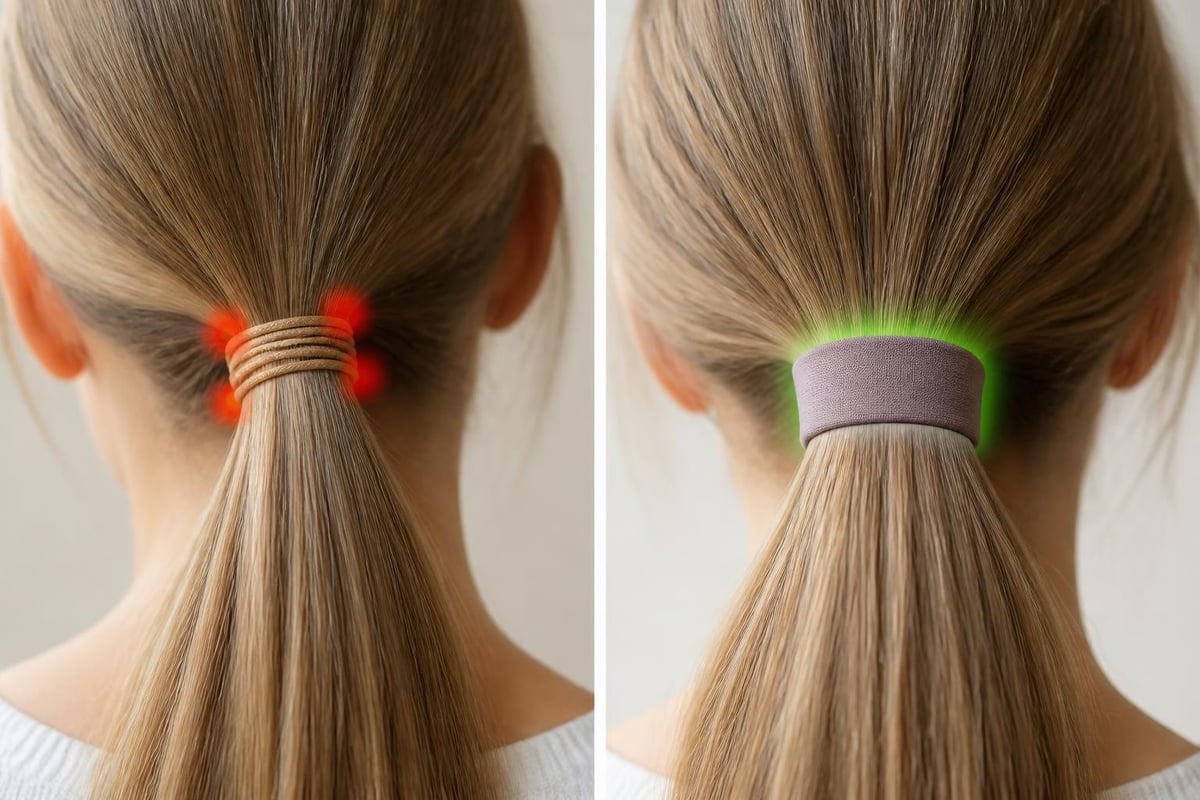
What most people don't realize is that the elastic band wrapped around your hair multiple times is doing invisible damage with every wear. The tight grip creates tension points that lead to mechanical breakage, and the indentation left behind tells you exactly where your hair is being stressed most. That's not a styling issue. That's a material problem.
Why Traditional Hair Elastics Damage Your Hair
Standard rubber bands and basic elastics create friction every time you pull them through your hair. The surface texture catches on individual strands, and the constant tension weakens the hair shaft at the point of contact. This isn't theoretical. This is what I see in the salon when clients come in with breakage concentrated right where they wear their ponytail daily.
The crease is the visible symptom, but the real issue is cumulative damage over time. Hair elastics with metal connectors are particularly problematic because they create sharp edges that slice through delicate strands. Even fabric-covered versions often have exposed seams that snag fine hair and cause split ends.
Material Composition Matters
According to research on material compatibility and surface structure, not all elastics are created equal in terms of tissue interaction. The materials used in traditional hair ties can vary dramatically in how they interact with hair and scalp, affecting everything from allergic reactions to mechanical stress on individual strands.
Consider these common elastic types and their limitations:
- Standard rubber bands: High friction, maximum crease, often contain latex
- Metal-connector elastics: Sharp edges cause breakage and snag curly hair
- Thin stretchy loops: Lose elasticity quickly, require multiple wraps, increase tension
- Fabric-covered generics: Surface wear exposes rough seams within weeks
Hair ties were never originally designed with hair health in mind. The early versions prioritized hold over everything else, and plenty of modern drugstore options still follow that outdated model.
The Hair Tie Bracelet Upgrade
Here's where the conversation shifts completely. Instead of treating hair elastics as disposable rubber bands, what if they functioned as both styling tools and jewelry? That's the concept behind hair tie bracelets, and it solves both the aesthetic problem and the damage problem simultaneously.
Hair tie bracelets feature smooth, often beaded or charm-embellished designs that eliminate the rough surfaces causing friction. The broader band distributes tension across a wider section of hair, reducing the pressure concentrated at a single point. And because they're designed to be worn on your wrist when not in your hair, they actually look intentional.
The Boho Collection Solution
At The Pixie Garden, I specifically curated the Boho Hair Tie Bracelets collection to address these exact problems. These aren't just prettier elastics. They're fundamentally different in how they interact with your hair.
The Beach Hair Tie Bracelets incorporate starfish and shell charms that give you a coastal, effortless look whether they're holding your ponytail or stacked on your wrist. The smooth beaded construction means zero snagging, and the slightly thicker elastic band creates hold without requiring multiple tight wraps.
The Heart Hair Tie Bracelets deliver a feminine, stackable aesthetic that works for everything from workout ponytails to office updos. The decorative hearts provide visual interest, but the real value is in the construction. These distribute tension evenly and slide out of your hair without pulling or catching.
For clients who want something softer and more versatile, the Bow Hair Tie Bracelets in Dusty Pink offer a muted statement that pairs with nearly any outfit. The bow detail sits flat against your wrist when worn as a bracelet, and the neutral pink works across seasons and styles.
| Hair Tie Type | Crease Factor | Wrist Wearability | Hair Compatibility | Breakage Risk |
|---|---|---|---|---|
| Traditional Rubber | High | Poor | All types | High |
| Metal Connector | Medium-High | Poor | Straight, fine | Very High |
| Thin Elastic Loop | Medium | Fair | Fine, straight | Medium |
| Hair Tie Bracelet | Low-None | Excellent | All types | Low |
Why Bracelets Work Better for Ponytails and Braids
The mechanics are straightforward. When you wrap a thin elastic around your ponytail three or four times, you're compounding the tension with each rotation. That's why you get the deep crease and why fine hair often breaks right at the elastic line. Hair tie bracelets require fewer wraps because of their construction, which immediately reduces stress on the hair shaft.
For braids, the difference is even more pronounced. Traditional elastics at the end of a braid create a visible bulge and often fray the ends because you're gathering all that hair into a tight point. A bracelet-style elastic finishes the braid with a cleaner line and less mechanical stress on the outermost strands.
No Snag, No Crease Technology
What makes these work without creasing comes down to surface texture and elastic recovery. Smooth beaded surfaces don't catch on the cuticle layer of your hair, which means they slide in and slide out without roughing up the surface. The elastic material itself maintains tension without needing to be stretched to maximum capacity, so you're not forcing your hair into an unnaturally tight hold.
This is particularly important for fine or chemically-treated hair, which is already more susceptible to breakage. When I'm working with color clients or anyone with compromised hair integrity, I always recommend switching to a smoother elastic option. It's one of the simplest changes with the most visible results.
Styling tools have always served two purposes at once: functional hold and aesthetic expression. Hair tie bracelets honor both.
They Double as Stackable Jewelry
One of the reasons clients love these is the wrist factor. When you pull your hair down mid-day, you're not left with a stretched-out rubber band cutting off circulation or an ugly spiral coil sitting awkwardly on your arm. You have what looks like an intentional bracelet that coordinates with your outfit.
The Beach collection stacks beautifully with other coastal-themed jewelry. The Heart styles layer well with delicate chain bracelets or watches. And the Dusty Pink Bow option works as a standalone accent or combined with metallics for contrast. When a client asks me to build that metallic pairing into the tie itself, I reach for the mermaid-toned shimmer scrunchie trio, because the shifting blue and green sheen reads like a cuff on the wrist and still gathers a ponytail without pressing a ridge into the hair.
This dual functionality means you're more likely to keep quality hair accessories on hand instead of losing track of disposable elastics. And that consistency matters for hair health. When you're using the same well-designed elastic repeatedly, you're not subjecting your hair to the variable quality of whatever random band you grabbed from the bottom of your bag.
From Functional to Fashion Statement
The evolution of the hair elastic mirrors broader trends in how we approach styling tools. Just as scrunchies crossed over from purely functional to genuinely iconic, hair tie bracelets represent the next iteration of making functional items beautiful enough to feature rather than hide.
When I design product selections for The Pixie Garden, I'm always looking for that intersection of professional performance and everyday wearability. Hair tie bracelets hit both marks without compromise.
Material Choices and Hair Type Compatibility
Not all hair types respond the same way to different elastic materials. Fine hair needs minimal tension with maximum grip, which is why smooth, slightly thicker bands work better than thin loops. Curly and textured hair requires elastics that won't catch on coils or create frizz when removed, making seamless construction essential.
For fine or straight hair:
- Choose bracelet elastics with smooth beads or charms
- Avoid metal connectors that create sharp edges
- Look for moderate stretch that doesn't require multiple wraps
For curly, coiled, or textured hair:
- Prioritize completely seamless construction
- Select wider bands that distribute tension
- Ensure easy removal without snagging on curl patterns
For thick or dense hair:
- Consider elastics with stronger hold without additional wraps
- Look for durable materials that maintain elasticity over time
- Choose designs that won't slip out during activity
Research on shape memory properties of hair demonstrates that hair structure naturally resists deformation, which is why creases occur when elastics force hair into unnatural shapes for extended periods. Better elastic design works with your hair's natural properties rather than against them.
The Professional Styling Secret Nobody Talks About
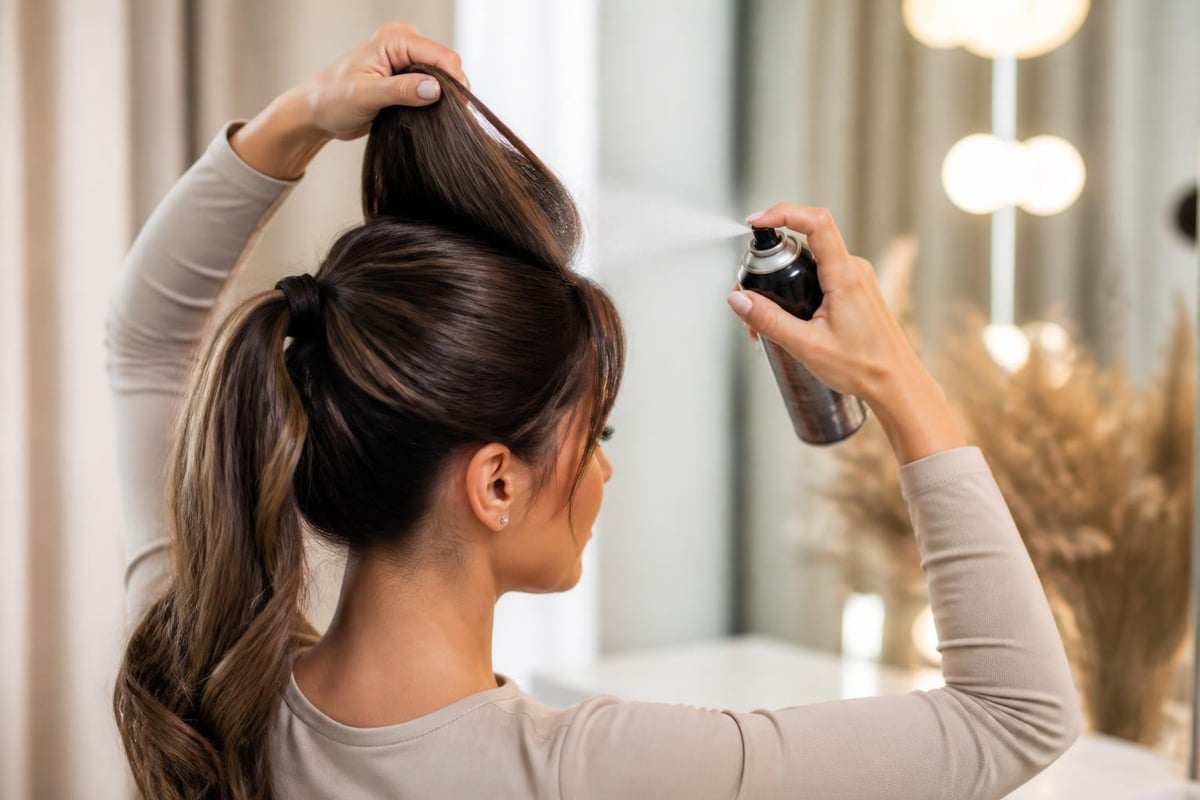
Here's the technique that elevates any ponytail or braid from basic to polished: address your flyaways before you pull your hair back. Most people secure the elastic first, then try to smooth down the baby hairs and shorter pieces around the hairline. That's backward, and it's why your ponytail never looks as sleek as you want.
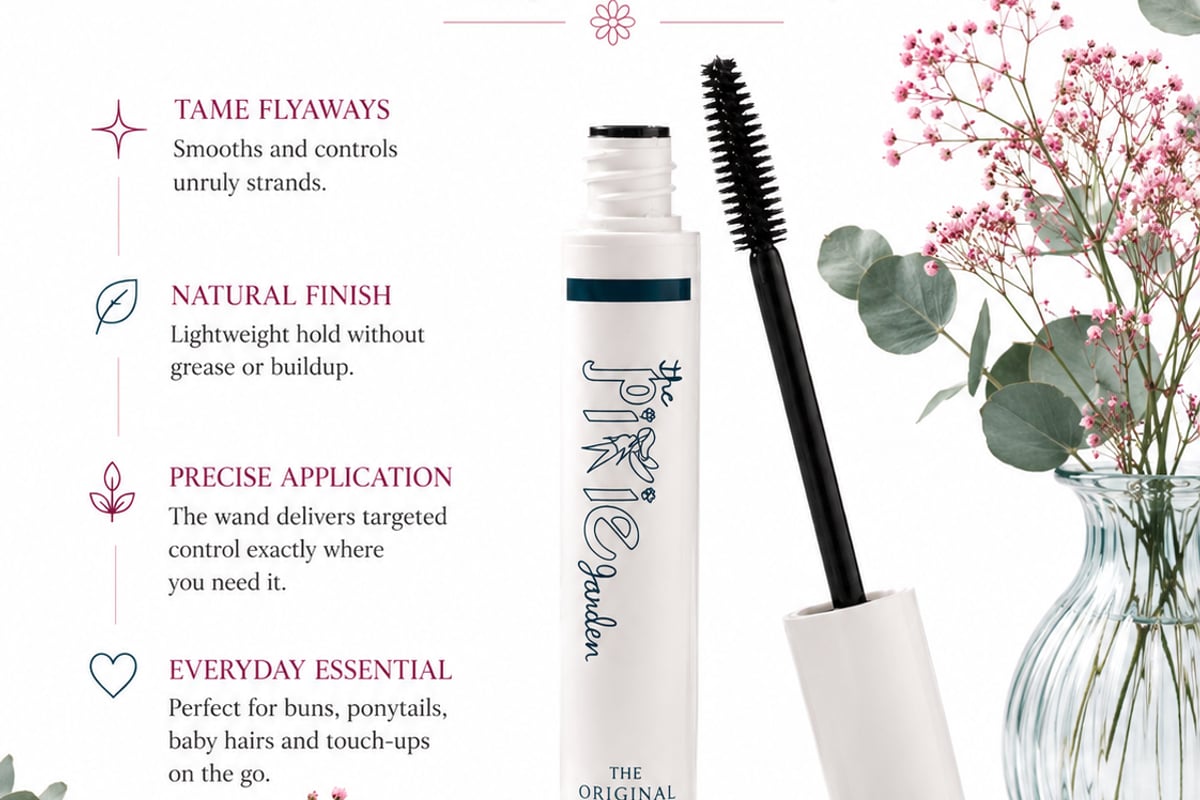
Before you gather your hair with any elastic, apply a Hair Finishing Stick along your hairline and part. This alcohol-free, water-based formula tames flyaways with flexible, all-day hold and a smooth, non-greasy finish, with no stiffness or residue. The mascara-style wand targets baby hairs precisely, which means you control exactly which pieces get smoothed and which maintain volume.
Then pull your hair back with your bracelet elastic. The combination creates what looks like a professionally styled ponytail because you've controlled the elements that typically create a messy appearance. The elastic holds without creasing, and the finishing stick keeps your hairline clean throughout the day.
This is the same technique I use in the salon for bridal updos and editorial shoots. The only difference is I've made it accessible for daily styling at home.
Proper Elastic Placement for Different Styles
Where you position your elastic changes both the aesthetic and the stress on your hair. A high ponytail creates more tension at the crown, which is why using a smoother, lower-tension elastic becomes critical. A low ponytail or braid distributes weight differently and can typically handle slightly more hold without causing damage.
High Ponytail Positioning
Gather hair at the crown and secure with a single wrap of a bracelet elastic. The elevated position creates natural lift, but it also puts stress on the roots. Using an elastic that doesn't require multiple wraps reduces that tension significantly. If you wear high ponytails frequently, rotate the exact placement slightly each day to avoid creating a permanent weak point in the same location.
Low Ponytail and Braid Technique
Position the elastic at the nape or lower for a more relaxed style. This placement works well with textured hair and creates less tension on the scalp. For braids, secure the elastic at the very end rather than several inches up, which allows the braid to maintain its shape without creating unnecessary bulk at the finish point.
Side Ponytail Considerations
Asymmetrical styles put uneven tension on your hair, so elastic choice becomes even more important. A smooth bracelet elastic prevents the snagging that often occurs when you pull hair to one side and secure it. The decorative element also plays into the intentional asymmetry of the style.
Maintaining Elastic Longevity and Performance
Even the best hair elastics degrade over time, but how you care for them determines whether they last weeks or years. Bracelet-style elastics with decorative elements require slightly different care than basic bands, primarily because you want to preserve both the elastic function and the aesthetic details.
Wash hair tie bracelets periodically with gentle soap and warm water, especially if you use styling products that can build up on the beads or charms. Allow them to air dry completely before wearing to prevent weakening the elastic core. Store them flat or loosely looped rather than stretched over objects, which extends the elastic memory.
Replace elastics when you notice decreased tension or visible wear on the surface. A stretched-out elastic won't hold your style properly and will require more wraps to compensate, which defeats the purpose of using a low-tension option in the first place.
Durability has always been the first thing people ask of a hair fastener, and that has not changed. Modern materials give us better performance, but proper care is still what decides how long an elastic actually lasts.
Alternative Options for Specific Hair Needs
While hair tie bracelets solve the crease and aesthetic problems for most people, certain hair situations call for different solutions. If you're dealing with very short layers or extremely fine hair that slips out of standard elastics, consider silk satin scrunchies which provide gentle hold with maximum surface smoothness.
For a smooth, low-crease tie that also doubles as a wrist accessory, the handmade Upcycled Sari Silk Hair Tie wraps a gentle elastic in upcycled vintage silk. The silk surface glides over fine hair instead of snagging it, and because each one is made from reclaimed sari fabric, every tie is one of a kind.
For active lifestyles where you need serious hold without any slippage, recycled fabric ribbed hair elastics offer textured grip that stays put during workouts while still maintaining a crease-free profile. The ribbed construction distributes tension differently than smooth bands, which some hair types respond to better.
And if you're managing hair health concerns beyond just elastic damage, it's worth exploring comprehensive solutions. Thinning hair or noticeable hair loss at the crown requires professional intervention beyond just switching your accessories, which is why treatments like Procell Microchanneling combine collagen-inducing microchanneling with growth factors to support new hair development and visibly thicker density.
Daily Wear Strategies That Protect Your Hair
How often you wear your hair pulled back matters as much as what you use to secure it. Constant tension in the same position creates traction alopecia, which is reversible early if the tension is removed and becomes permanent only after prolonged, repeated pulling. Even with the best elastics, varying your hairstyles throughout the week protects your hairline and prevents damage.
Rotation schedule for optimal hair health:
- Day 1: High ponytail with bracelet elastic
- Day 2: Loose waves or down styles
- Day 3: Low braid with finishing stick at hairline
- Day 4: Half-up style with claw clips
- Day 5: Side ponytail with decorative elastic
This rotation gives your hair follicles recovery time between tension styles and distributes stress across different areas of your scalp. It's a simple schedule that makes a measurable difference in long-term hair health. For that Day 5 slot I keep one patterned option in the drawer at my station, usually a black and white animal print scrunchie, so the fabric-covered band gives your hairline an easy day while the print still looks like you chose it on purpose.
When you do wear elastics daily, remove them as soon as you're able. Sleeping in a ponytail creates hours of unnecessary tension and increases the likelihood of permanent creasing and breakage. Take thirty seconds to remove the elastic before bed, even if you plan to put your hair back up the next morning. The one exception is a loose, low ponytail or bun in a silk or satin scrunchie, which is safe overnight and often protective. Never sleep in a rubber or metal-crimp elastic.
The Cost-Per-Wear Analysis
Quality hair accessories cost more upfront than drugstore options, but the math shifts when you calculate actual use. A pack of ten basic elastics for three dollars seems economical until half of them break within two weeks and the rest stretch out within a month. You're replacing them constantly, and each replacement cycle comes with the hair damage those inferior elastics cause.
A well-constructed hair tie bracelet at five to six dollars lasts months with proper care and doesn't damage your hair in the process. Over a year, you'll spend less on replacements and save significantly on damage control treatments trying to repair broken ends and creases.
| Product Type | Initial Cost | Lifespan | Replacements/Year | Annual Cost | Damage Factor |
|---|---|---|---|---|---|
| Drugstore Elastics (10-pack) | $3 | 2-4 weeks | 12-26 packs | $36-78 | High |
| Hair Tie Bracelets | $4.95-5.95 each | 3-6 months with daily use | 2-4 | $10-24 | Minimal |
| Silk Satin Scrunchies | $5.95 each | 8-12 months | 1-2 | $6-12 | Very Low |
The professional perspective I bring to The Pixie Garden means evaluating products not just on immediate appeal but on long-term value for your hair. That calculation always favors quality construction over cheap convenience.
Expert Recommendations for Specific Situations
Certain styling scenarios demand specific elastic choices. Here's what I recommend to salon clients based on their needs:
For wedding and formal events: Choose hair tie bracelets that coordinate with your jewelry. The Beach collection works for coastal or outdoor ceremonies, while Heart styles suit romantic, traditional settings. The bracelet function means you can remove your updo later without awkward elastic visibility.
For athletic activities: Prioritize hold over aesthetics during actual workouts, but switch to a bracelet elastic immediately after. The textured grip of ribbed elastics prevents slippage during high-impact movement, but you don't want to leave that tension on your hair longer than necessary.
For professional environments: Sleek, polished ponytails require the combination approach: finishing stick for flyaway control plus a subtle bracelet elastic that looks intentional if visible. Dusty Pink Bow styles or neutral beaded options work in conservative settings.
For textured and protective styles: Avoid any elastic with exposed metal or rough seams. Smooth, seamless construction is non-negotiable for coily and curly hair patterns. Consider wider bands that won't create dents in twist-outs or braid-outs.
The Health Considerations Beyond Aesthetics
While most of our focus centers on preventing hair damage, it's worth noting that elastic materials themselves can cause reactions in sensitive individuals. Research on neurotoxicity and tissue compatibility in elastic materials shows that latex, specifically, can trigger allergic responses ranging from mild irritation to more serious reactions.
If you experience scalp itching, redness, or irritation around your hairline where elastics contact skin, consider latex-free options. Most modern hair tie bracelets use synthetic elastic compounds that provide the same hold without the allergenic proteins found in natural rubber latex.
This is another area where quality matters beyond just performance. Reputable manufacturers disclose material composition and avoid common irritants, while bargain options often contain unlabeled compounds that can cause sensitivity reactions over time.
The shift from traditional hair elastics to bracelet-style alternatives represents more than just an aesthetic upgrade. It's a fundamental change in how you protect your hair while maintaining the styles you want. When you choose elastics designed to hold without damage and look intentional whether they're in your hair or on your wrist, you're investing in both immediate style and long-term hair health. At The Pixie Garden, we've curated hair accessories that deliver professional results with the ease you need for daily styling, because polished hair shouldn't require compromise.
