

Hair Accessories For 2026: Expert Guide to Perfect Styling
Delena MarklandThe single most important thing I can tell you about hair accessories in 2026 is this: the right clip, scrunchie, or headband does more for your style than an extra 20 minutes with a curling iron. After 25 years as a licensed cosmetologist and owner of The Pixie Garden salon in Syracuse, Utah, I have watched accessories go from afterthought to essential styling tool. Whether you are managing flyaways, locking in an updo for a 12-hour day, or adding personality to your everyday look, understanding how to use hair accessories strategically is what separates a style that holds from one that falls apart by lunch. This guide is everything I teach my clients and stylists about choosing, applying, and getting the most out of hair accessories in 2026.
Understanding the Role of Hair Accessories in Modern Styling
I tell every new client the same thing: hair accessories are not decoration. They are tools. The right accessory choice can mean the difference between a style that lasts all day and one that falls flat within the first hour. I see this in my chair constantly. Someone comes in frustrated because their ponytail keeps sliding or their updo collapsed at an event, and nine times out of ten the fix is not a different technique. It is a better accessory.
Functional Benefits Beyond Aesthetics
What I love about modern hair accessories is the engineering behind them. They control volume, manage texture, and secure styles while adding visual interest. The accessories I stock in my salon today are nothing like what I trained with in the late '90s. They work with your hair's natural characteristics rather than fighting them.
Here is how I break down the primary functions for my clients:
- Hold and security: Maintaining structured styles throughout the day without constant touch-ups
- Texture management: Smoothing frizz or enhancing natural wave patterns without adding product weight
- Style versatility: Transforming a look from casual to formal in under a minute
- Hair health: Reducing tension and preventing the damage I see from clients who use the wrong elastics year after year
The cultural significance of hair accessories extends back centuries, but the versions I recommend today combine traditional beauty with modern engineering. For those drawn to vintage-inspired styling, the ornate headbands, feathered clips, and Art Deco combs of the 1920s hair accessories era continue to influence what I see walking through my salon door. Clients bring me Pinterest boards full of those looks, and I love showing them how to recreate that aesthetic with accessories that actually hold.
Essential Hair Accessories for Every Hair Type
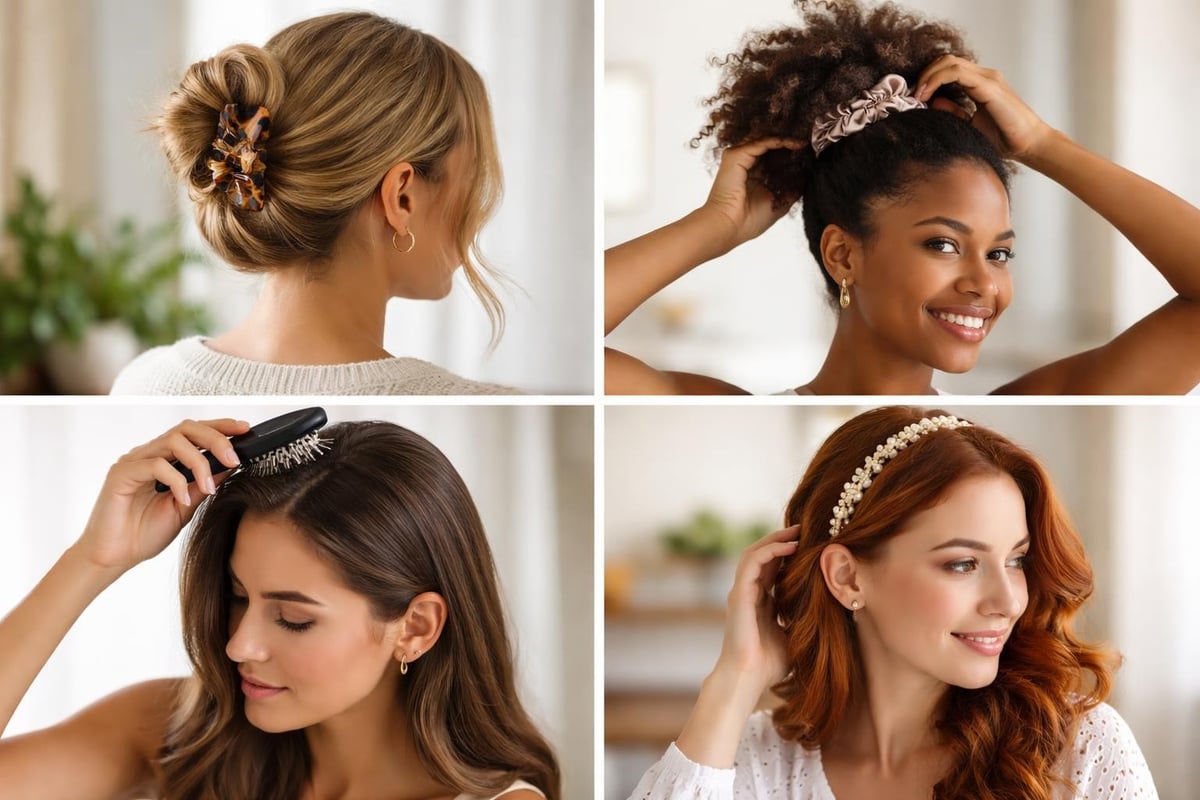
This is where I spend most of my consultation time. Selecting the right hair accessories depends entirely on your specific hair characteristics. Thickness, texture, length, and density all influence which accessories actually deliver. What works beautifully on my fine-haired client will be useless on someone with thick, coarse hair. I have seen enough accessory failures to know that one-size-fits-all does not exist.
Fine Hair Solutions
Fine hair is my specialty. I work with a lot of fine-haired clients in my salon, and the number one complaint is accessories that slide right out. Fine hair requires accessories that provide grip without adding excessive weight. Lightweight claw clips with textured grips prevent slippage, while smaller scrunchies avoid creating bulk. What I tell my fine-haired clients is this: you need accessories that enhance volume rather than flatten what little you have.
| Accessory Type | Best For Fine Hair | Why I Recommend It |
|---|---|---|
| Mini Claw Clips | Sectioning, half-up styles | Gentle hold without weight that drags fine strands down |
| Silk Scrunchies | Ponytails, buns | Prevents the breakage and creasing I see from cheap elastics |
| Wire Headbands | Keeping hair off face | Adds lift at the crown where fine hair falls flat |
| Bobby Pins (thin) | Securing small sections | Precise placement without the bulk that overwhelms fine hair |
Thick and Coarse Hair Requirements
Thick hair demands stronger construction and wider surface contact. I cannot count how many broken claw clips I have seen from clients who tried to force a medium clip through three inches of thick hair. Large claw clips with reinforced springs and extended teeth penetrate multiple layers effectively. For those exploring salon styling essentials, the professional-grade accessories I carry are specifically designed for substantial hair volume and make daily styling significantly easier.
Here is what I recommend for my thick-haired clients:
- Jumbo claw clips: Handle substantial volume with secure closure that will not snap
- Wide elastic bands: Distribute tension across more hair so you are not pulling at a single pressure point
- Metal barrettes: Provide industrial-strength hold when nothing else will stay put
- Large scrunchies: Accommodate ponytail circumference without strangling the hair
Curly and Textured Hair Considerations
Curly hair presents unique challenges that I take seriously in my salon. Accessories must accommodate texture without disrupting natural curl patterns or causing the frizz that sends my curly clients into a panic. The rise of curly hairstyles in mainstream fashion has driven real innovation in curl-friendly accessory design, and I am here for it.
Satin and silk materials reduce the friction that leads to frizz. Wide-tooth claw clips avoid crushing curls, while fabric-wrapped options prevent snagging. I always ask my curly clients about their curl type before recommending accessories, because what enhances a loose wave will wreck a tight coil. Understanding your curl pattern helps identify which accessories work with your texture rather than against it.
Professional Techniques for Hair Accessories Application
This is the part most people skip, and it is exactly where the magic happens. Proper technique separates amateur results from the polished looks you see walking out of my salon. I have watched clients spend good money on premium accessories and then apply them in ways that guarantee failure.
The Foundation Principle
I start every styling appointment the same way: properly prepared hair. Clean, appropriately moisturized hair accepts accessories better than product-heavy or overly dry strands. For many styles, a light finishing product creates the ideal surface for accessory placement.
Here is the step-by-step preparation I walk my clients through:
- Wash and condition hair according to your type
- Apply heat protectant if using thermal tools
- Dry hair to desired texture (smooth, wavy, or curly)
- Apply minimal styling product for hold. Less is more here.
- Section hair logically before accessory placement
- Secure accessories at strategic anchor points where they will actually grip
Tension Management
I see tension headaches and hair breakage in my chair more often than I would like, and the cause is almost always too-tight accessories. The goal is secure hold with comfortable distribution. When using claw clips, gather hair smoothly without pulling taut. Allow slight looseness at the scalp while maintaining overall structure.
I test tension on every style I create by gently tugging the completed look. Movement should feel secure but not rigid. If your scalp aches or you can see the skin pulling, you have gone too far. This balance ensures all-day comfort alongside lasting hold, and it is the difference between a style you forget you are wearing and one you are dying to take down by 3 PM.
Layering Accessories Strategically
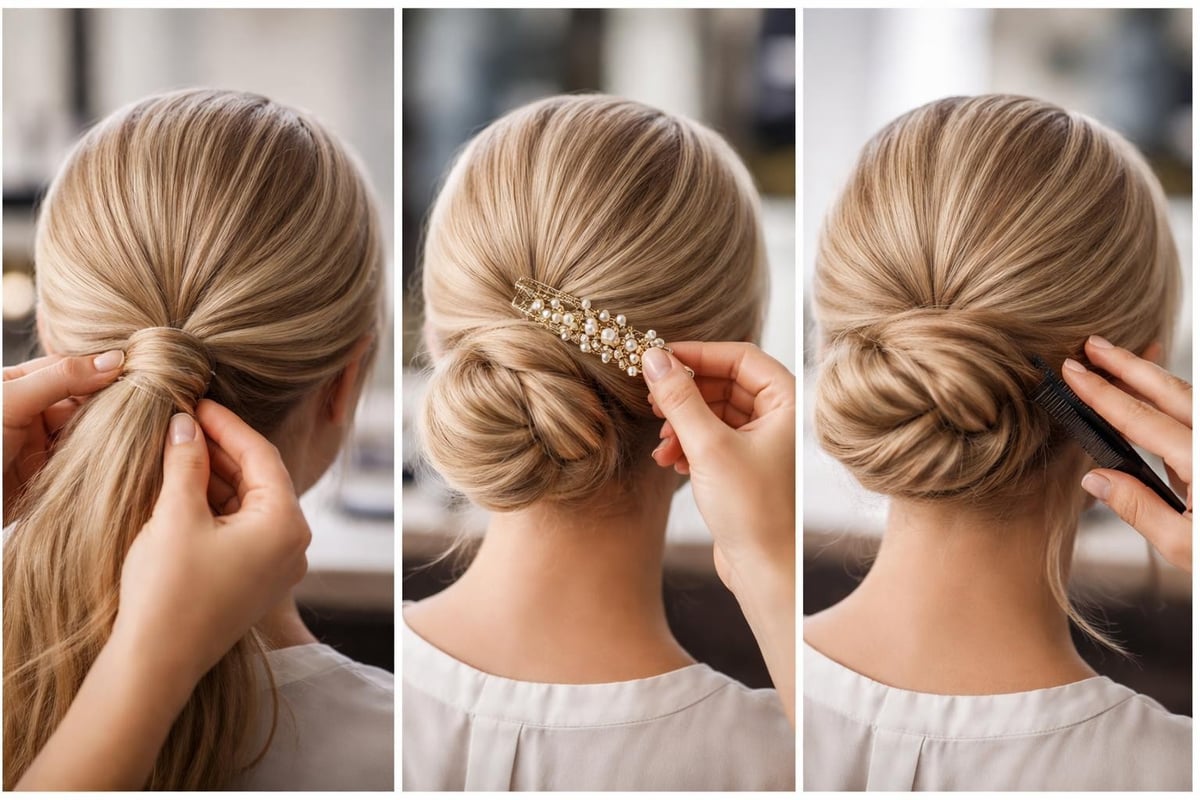
Combining multiple hair accessories creates dimension and visual interest, and this is one of my favorite things to do for clients heading to events. However, strategic placement prevents overwhelming the style. I always start with foundational pieces like clips or bands, then add decorative elements sparingly.
A sophisticated layered approach I use in my salon might include:
- Base elastic securing primary structure
- Decorative claw clip adding a focal point
- Small pins concealing elastic edges
- Finishing stick smoothing flyaways around the hairline for that polished final touch
Trending Hair Accessories for 2026
The accessory trends for Fall 2026 influence hair accessory design significantly. I keep a close eye on what is coming down the runway because it shows up in my salon about six months later. Here is what I am seeing and stocking right now.
The Claw Clip Renaissance Continues
I have been doing hair for over 25 years, and the resurgence of claw clips has been one of my favorite trends to watch. Modern versions feature refined details like pearl embellishments, tortoiseshell patterns, and geometric shapes. These elevated designs transition seamlessly from a desk to a dinner reservation, and I recommend them to clients constantly.
What excites me most is the modular claw clip designs that adjust to different hair volumes. This innovation addresses the single most common complaint I hear: clips that work beautifully on fresh, clean hair but slip right out of second-day styles. If you have been frustrated by that, the newer adjustable options are worth trying.
Sustainable and Eco-Conscious Options
I am intentional about what I bring into my salon, and sustainability matters to me and my clients. Environmental awareness is driving real material innovation in hair accessories. Recycled plastics, natural fibers, and biodegradable components deliver solid performance without the guilt.
Natural materials I am recommending right now:
- Bamboo: Lightweight, durable, and a renewable resource
- Recycled acetate: Reduces petroleum-based plastic use without sacrificing the look
- Organic cotton: Soft fabric accessories without synthetic fibers irritating sensitive scalps
- Reclaimed wood: Unique patterns in decorative pieces that no two are alike
Oversized Statement Pieces
Following the trend identified in Summer 2025 accessory trends, oversized bows and dramatic clips remain influential. I love these because they turn a five-minute low bun into something editorial-worthy with one well-chosen piece.
That said, proportion matters. I always tell my clients: oversized accessories work best with balanced styling. Pair dramatic clips with sleek, controlled hair textures rather than competing volume. If your hair is already big and textured, a massive bow on top creates chaos, not style. Let the accessory be the star or let the hair be the star, but not both at once.
Seasonal Styling with Hair Accessories
In my salon, I rotate my accessory recommendations with the seasons. Different weather, different wardrobes, different needs.
Spring and Summer Lightweight Options
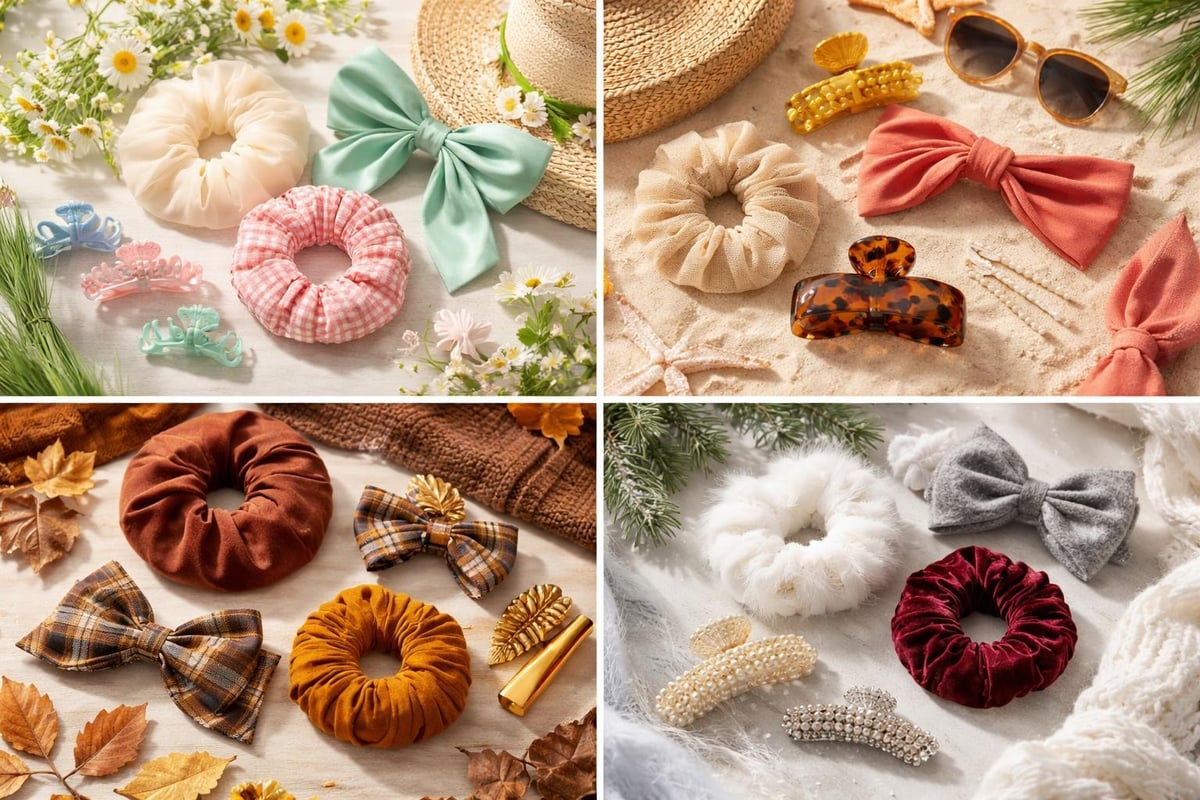
Warmer months call for breathable materials and minimal contact accessories. I push open headbands, silk scrunchies, and minimalist clips during Utah summers because they prevent overheating while managing hair in humidity. Nobody wants a heavy velvet scrunchie in July.
| Season | What I Recommend | Styling Focus |
|---|---|---|
| Spring | Floral clips, pastel scrunchies | Fresh, romantic looks |
| Summer | Claw clips, silk bands | Heat management, off-neck styles |
| Fall | Tortoiseshell, deep tones | Polished, sophisticated styles |
| Winter | Velvet, metallic accents | Texture mixing, statement pieces |
The influence of Hailey Bieber's waterfall layers showcases how accessories complement trending cuts. What I notice with layered styles is that they benefit from accessories that work with movement rather than restricting it. Rigid clips fight layers. Flexible, lightweight options let them flow.
Fall and Winter Textured Accessories
Cooler weather is when I bring out the richer textures and heavier materials. Velvet scrunchies, knit headbands, and jewel-toned clips align with seasonal wardrobes and also provide practical warmth for ears and necks. I keep a curated fall selection at my station starting in September.
The fall 2025 hair trends emphasizing dimensional colors pair beautifully with accessories that enhance rather than hide new color work. I always coordinate accessory recommendations with my color clients. Tortoiseshell accessories complement brunette and auburn tones, while metallic clips highlight blonde and silver shades. For temporary dimension without a salon commitment, hair mascara lets you add color streaks or cover grays in seconds. It is an easy way to coordinate your look with your seasonal accessory palette without sitting in my chair for two hours.
Solving Common Hair Accessory Challenges
These are the problems I troubleshoot in my salon every single week. Even quality hair accessories can underperform without the right approach.
Preventing Slippage
Slipping accessories are the number one complaint I hear across all hair types. The solutions depend on the cause. For fine, slippery hair, textured or rubberized grip surfaces provide traction. Thick hair usually needs larger accessories with deeper teeth that can actually penetrate multiple layers.
Here are the anti-slip strategies I teach my clients:
- Slightly tease hair at the accessory placement point to create grip
- Use dry shampoo for added texture. This is my secret weapon for fine hair.
- Choose accessories with silicone or rubber grips built into the design
- Secure with additional hidden bobby pins underneath
- Cross two bobby pins in an X formation beneath clips for serious hold
Avoiding Creases and Dents
Hair creasing from accessories is something I hear about constantly, especially from clients who need to transition their look throughout the day. If you need hairstyle flexibility, select crease-free options. Spiral hair ties, smooth satin scrunchies, and padded clips minimize marking.
Timing also matters more than people realize. Remove accessories before hair fully sets in that position. For overnight styling, choose sleep-safe accessories that distribute pressure evenly. I always tell my clients: if you are going to sleep in it, silk or satin only.
Managing Accessory-Induced Breakage
This is the one that concerns me most as a cosmetologist. Tight elastics and rough materials cause unnecessary hair damage that I then have to deal with in the salon. The shift toward hair-health-conscious accessories reflects growing awareness of this issue. When I curate the Pixie Picks collection, I prioritize both style and hair integrity because I refuse to sell something that will damage my clients' hair.
Prevention methods I recommend:
- Rotate accessory placement positions daily so you are not stressing the same spot
- Never sleep in tight clips or elastics
- Choose seamless, smooth-edge accessories without sharp seams or joins
- Limit use of metal clasps on wet hair, which is at its most fragile
- Replace worn accessories with rough edges immediately. That frayed scrunchie is not saving you money if it is breaking your hair.
Accessory Pairing with Hair Products
This is where my cosmetology background really comes into play. The synergy between hair accessories and the right styling products creates results that neither can achieve alone.
Working with Finishing Products
Finishing products set the stage for accessory success. Light hairsprays provide hold without stiffness, allowing accessories to grip effectively. When managing flyaways around updos or ponytails, precision tools make a significant difference. I reach for a targeted finishing product on almost every client because those polished edges elevate the entire style from good to professional.
The Hair Finishing Stick is what I use in my salon daily. It is a lightweight, non-greasy solution for taming flyaways and creating that final polish that professional styles demand. I use it whether I am securing a clean bun or defining a sharp part. For a complete breakdown of application techniques and use cases by hair type, the Hair Finishing Stick guide covers flyaway control on fine hair, edge smoothing on thick or textured styles, and how to work it into your accessory routine. It is one of the most-asked-about products in my chair.
Texture Products for Enhanced Hold
Dry shampoo, texturizing sprays, and volumizing mousses create ideal surfaces for accessory application. These products add microscopic texture that prevents slipping without visible residue. I use this trick on every fine-haired client who complains about clips sliding out.
Here is how I apply texture products for the best accessory grip:
- At roots for volume-based styles
- Through mid-lengths for enhanced grip on clips and barrettes
- Avoiding areas where you want a smooth, sleek finish
- Before accessories, allowing a brief drying time so the product activates
Heat Styling Coordination
Heat-styled hair accepts accessories differently than air-dried textures, and I adjust my approach depending on what my client needs. Straightened hair may need additional texture for grip, while curled hair requires accessories that will not crush wave patterns. Understanding these interactions lets you adjust product application accordingly. I always tell my clients: plan your accessory before you pick up the flat iron, because the styling prep matters.
Building Your Hair Accessories Collection
I give this advice to every new client who asks me what to buy. Strategic collection building ensures you have options for various occasions without a drawer full of accessories you never touch.
Essential Starter Pieces
Start with versatile basics that accommodate multiple styles. Here is the starter collection I recommend to my clients:
- Two medium claw clips in neutral colors that match your wardrobe basics
- A set of five scrunchies in various sizes and colors for everyday rotation
- One silk or satin scrunchie for sleep or delicate styling without creasing
- A package of quality bobby pins matching your hair color, not the drugstore kind that bend on first use
- A simple headband comfortable enough for all-day everyday wear
- A finishing tool for flyaway control, because nothing ruins a polished accessory look faster than frizzy edges
This foundation handles most styling situations from casual to professional. You do not need 50 accessories. You need six good ones.
For skincare and makeup routines, a makeup headband is a practical specialty addition. It keeps hair completely off the face without the pressure points that standard styling headbands create, so your style stays intact while you work. I keep one at every station in my salon for exactly this reason.
Expanding for Variety
Once your basics are covered, add personality pieces. Statement clips, seasonal colors, and special-occasion accessories provide the styling flexibility that keeps things interesting. The top 2025 hair trends highlighting elevated claw clips demonstrate how one investment piece can elevate an ordinary style into something that gets compliments.
Here are the expansion categories I suggest to clients building their collection:
- Metallics: Gold, silver, rose gold for elegant occasions and holiday parties
- Patterns: Tortoiseshell, animal prints for visual interest without being loud
- Embellished: Pearls, crystals for formal events and weddings
- Seasonal: Holiday themes, summer brights, fall tones to rotate with your wardrobe
Quality Versus Quantity
I tell my clients this all the time: invest in fewer high-quality pieces rather than filling a drawer with disposable accessories. Quality construction ensures longevity, consistent performance, and better hair health outcomes. I examine materials, spring tension, and edge finishing on every single accessory before I put it on my salon shelf. Cheap accessories with rough seams or weak springs cost you more in the long run because they break your hair and break themselves. Buy once, buy right.
Hair Accessories for Professional Settings
Workplace appropriateness varies by industry, but the professional styling principles I teach stay consistent.
Conservative Office Environments
Traditional business settings favor subtle, polished accessories. I style a lot of professionals heading to corporate offices in Salt Lake City, and the approach is always the same: neutral tones, classic shapes, and minimal embellishment that maintains a professional appearance while adding refinement.
Professional-appropriate options I recommend:
- Tortoiseshell or black claw clips that disappear into the style
- Simple metal barrettes for a clean, polished look
- Neutral scrunchies in hair-matching shades
- Sleek headbands without excessive decoration
- Small decorative pins used sparingly as a subtle accent
Creative Industry Flexibility
Creative fields permit greater expression through hair accessories, and this is where I love to push boundaries with my clients. Bold colors, unique shapes, and artistic pieces showcase personality while maintaining polished execution. The key is intentional styling rather than haphazard accessory placement. There is a difference between "I chose this" and "I grabbed whatever was in my drawer."
I always balance creative accessories with controlled hair styling. Wild accessories work best with sleek, well-maintained base styles. Conversely, textured, undone hair pairs beautifully with minimal, refined accessories. Let one element be the statement, and let the other support it.
Caring for Your Hair Accessories
Proper maintenance extends accessory lifespan and protects your hair health. I am surprised how many clients never think about cleaning their accessories, and then wonder why they are getting buildup or breakouts along their hairline.
Cleaning Protocols
Regular cleaning prevents product buildup, oil accumulation, and bacterial growth. Most plastic and metal accessories tolerate gentle soap and warm water. Fabric-wrapped pieces may require spot cleaning or hand washing. I clean my salon accessories after every client, and I recommend you do the same at home on a regular schedule.
Here is the cleaning frequency I follow:
- Daily-use accessories: Weekly cleaning, no exceptions
- Occasional-use pieces: Monthly or as needed
- Fabric accessories: After 3-5 wears
- Metal clips: Wipe down after each use if product contact occurs
Storage Solutions
Organized storage prevents damage and makes styling more efficient. I tell my clients to separate accessories by type, keep frequently used items accessible, and protect delicate pieces from crushing. In my salon, every accessory has a designated spot, and that system works just as well at home.
Effective storage options include drawer dividers, clear containers for visibility, hanging organizers for larger collections, and travel cases for portability. Proper storage also helps you track your collection and prevents those unnecessary duplicate purchases where you buy the same clip three times because you could not find the first one.
Replacement Indicators
Worn accessories damage hair and fail to perform effectively. I check my salon inventory regularly and replace anything showing loose springs, rough edges, broken teeth, stretched elastics, or discoloration. Quality pieces last years with proper care, but all accessories eventually need replacement. If you feel a snag when you put it in or take it out, it is time. Do not wait for it to pull out a chunk of hair.
Adapting Accessories to Current Hairstyles
Your current cut influences which hair accessories work best. I always factor this into my recommendations after a haircut.
Short Hair Styling
Short styles often challenge people when it comes to accessories, but I have plenty of options for my pixie and bob clients. Small clips secure front sections, headbands add interest without length requirements, and decorative bobby pins create focal points. The 2025 hair trends embracing dramatic pixie cuts demonstrate how accessories enhance style without relying on length. I love showing my short-haired clients what is possible.
Short hair accessories excel at:
- Holding back growing-out bangs during the awkward phase
- Adding texture and visual interest to pixie cuts
- Securing small sections during styling or touch-ups
- Creating asymmetric visual interest that draws the eye
Medium Length Versatility
Medium lengths are the sweet spot for accessory versatility, and I tell my clients this when they are deciding on a cut. Half-up styles, low buns, braided accents, and ponytails all work beautifully at this length. Medium hair accommodates nearly every accessory type from minimal pins to statement clips. If you are building an accessory collection, this is the length where you get the most mileage out of every piece.
Long Hair Opportunities
Long hair provides the canvas for elaborate accessory work, and it is where I have the most fun with event styling. However, weight and volume require stronger accessories. Large claw clips, reinforced elastics, and multiple-pin techniques distribute hold across substantial hair mass. I always warn my long-haired clients against dainty accessories that look beautiful but cannot handle the job.
Long hair styling often benefits from:
- Sectioning with multiple smaller accessories to distribute the weight
- Layering decorative pieces over functional ones for a polished final look
- Using accessories to create structure in flowing styles that otherwise lack shape
- Choosing larger-scale accessories proportional to your hair volume so nothing looks lost
Mastering hair accessories transforms your daily styling routine from functional to exceptional, and after 25 years in this industry, I can tell you it is the most underrated skill in personal styling. Whether you are managing flyaways, securing complex updos, or simply adding personality to your everyday look, the right accessories combined with proper technique deliver salon-worthy results at home. The Pixie Garden is where I curate every hair accessory and styling product personally, choosing only what I would use on my own clients. I built this salon and this collection to give you the tools for effortless, beautiful hair every single day.
Explore more detailed style guides: our complete guide to floral hair barrettes for feminine, elegant styling, and how to wear bow hair clips for any occasion.
