

Claw Clip: Professional Styling Guide for Every Hair Type
Delena MarklandThe humble hair accessory has undergone a remarkable transformation over the past few decades, evolving from purely functional tools to statement pieces that define entire aesthetics. Among these accessories, the claw clip stands out as a versatile, practical, and increasingly stylish option that bridges the gap between professional salon results and everyday ease. Whether you're managing thick, dense hair that requires serious hold or fine strands that need gentle support, understanding how to select and use the right clip can revolutionize your daily styling routine.
The Evolution and Mechanics of the Modern Claw Clip
The history of claw clips traces back to the 1980s, when they emerged as a practical solution for securing hair quickly without the damage caused by tight elastics or metal pins. The basic design consists of two interlocking pieces connected by a spring hinge mechanism, with teeth or prongs that grip hair sections when closed. This seemingly simple construction has been refined over decades to create accessories that distribute tension evenly, minimize breakage, and accommodate various hair textures.
Modern manufacturing techniques have expanded what's possible with claw clip design. Professional-grade options now feature reinforced hinges that maintain consistent pressure throughout the day, curved shapes that follow the natural contour of the head, and tooth patterns specifically engineered to grip without snagging. The material composition matters significantly-high-quality acrylic resists flexing under load, which translates directly to hold performance and longevity.
Understanding Size and Shape Selection
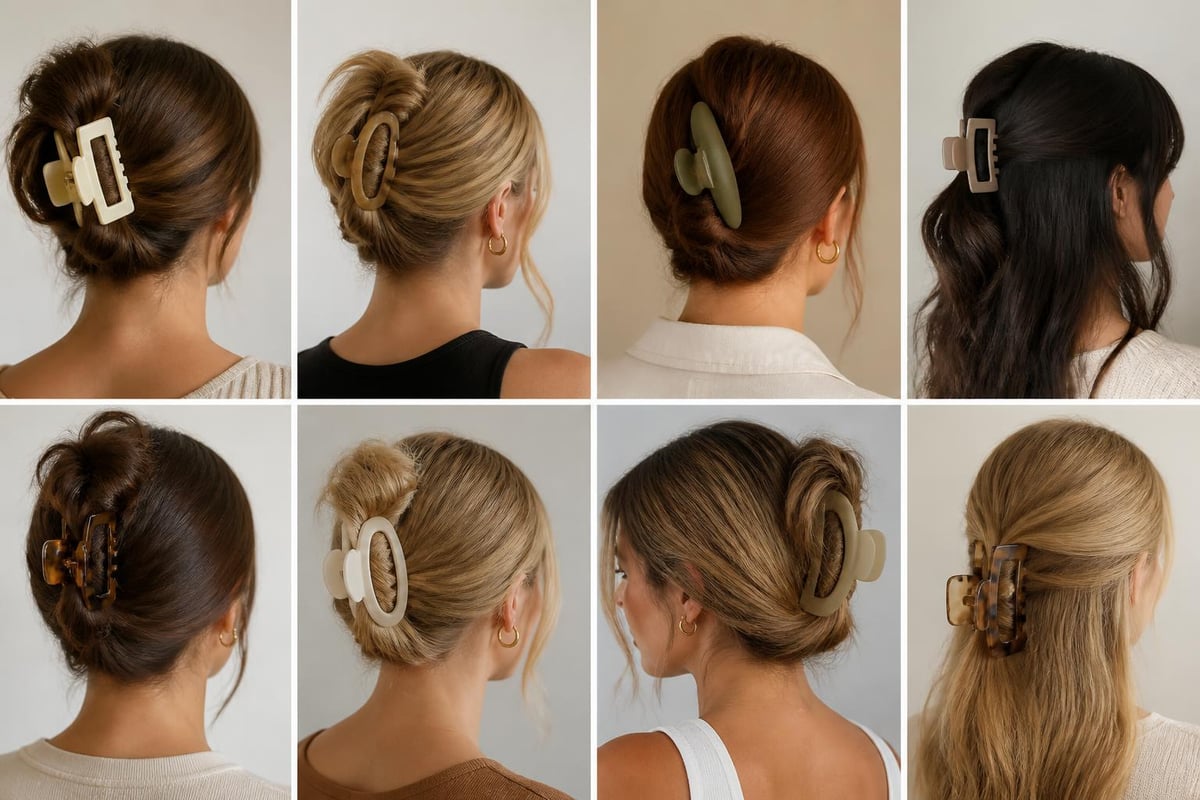
Choosing the appropriate size involves more than aesthetic preference. A 5-inch clip provides the surface area and tooth depth necessary for thick, dense hair types, while smaller 3-inch versions work better for fine to medium textures. The shape also influences functionality:
- Rectangular clips offer maximum tooth contact and work well for full updos
- Oval designs provide a sleeker profile for half-up styles
- Curved shapes contour to the head for secure, comfortable wear
- Specialty shapes (flowers, bows, geometric) add visual interest while maintaining function
Hair volume and length determine which size will actually hold throughout your day. A clip that's too small for your hair density will pop open under the weight, while an oversized option may feel heavy or create unnecessary bulk.
Professional Styling Techniques for Different Hair Types
The versatility of a well-designed claw clip extends across multiple hair textures and styling scenarios. Professional cosmetologists rely on these accessories not just for client convenience, but because they deliver consistent results when applied with proper technique.
Thick and Coarse Hair Strategies
Thick hair requires clips with specific mechanical properties. The spring tension must be strong enough to compress dense sections, while the tooth depth needs to penetrate through multiple layers. When working with this hair type, section control becomes critical.
Start by gathering hair at the desired height, ensuring you've captured all the layers you intend to secure. Twist the section slightly to create a rope-like structure-this reduces the cross-sectional diameter and makes it easier for the clip to grip effectively. Position the clip with teeth angled slightly upward, press to open, and release once the teeth have fully penetrated the twisted section.
For thick hair that tends to work loose from clips throughout the day, consider the Navy Blue Hair Claw Clip, which features a curved rectangular shape that distributes tension evenly across the section rather than pinching at a single point. This design approach matters when you're wearing your hair up for extended periods.
Fine and Medium Hair Applications
Fine hair presents different challenges. Standard clips often grip too aggressively, creating creases or pulling excessively at the roots. The solution involves both clip selection and application technique.
Choose clips with smaller teeth spacing and moderate spring tension. When securing fine hair, avoid over-twisting the section-this can create thin, rope-like strands that slip through the teeth. Instead, gather the hair smoothly and allow the clip to grip the natural bundle shape. Position the clip closer to the scalp for styles that need to stay put, or leave slight distance for a more relaxed aesthetic.
| Hair Type | Recommended Size | Tooth Pattern | Spring Tension |
|---|---|---|---|
| Thick/Coarse | 4-5 inches | Deep, wide spacing | Firm |
| Medium | 3-4 inches | Medium depth | Moderate |
| Fine | 2-3 inches | Shallow, close spacing | Light to moderate |
Six Essential Styles That Work for Every Occasion
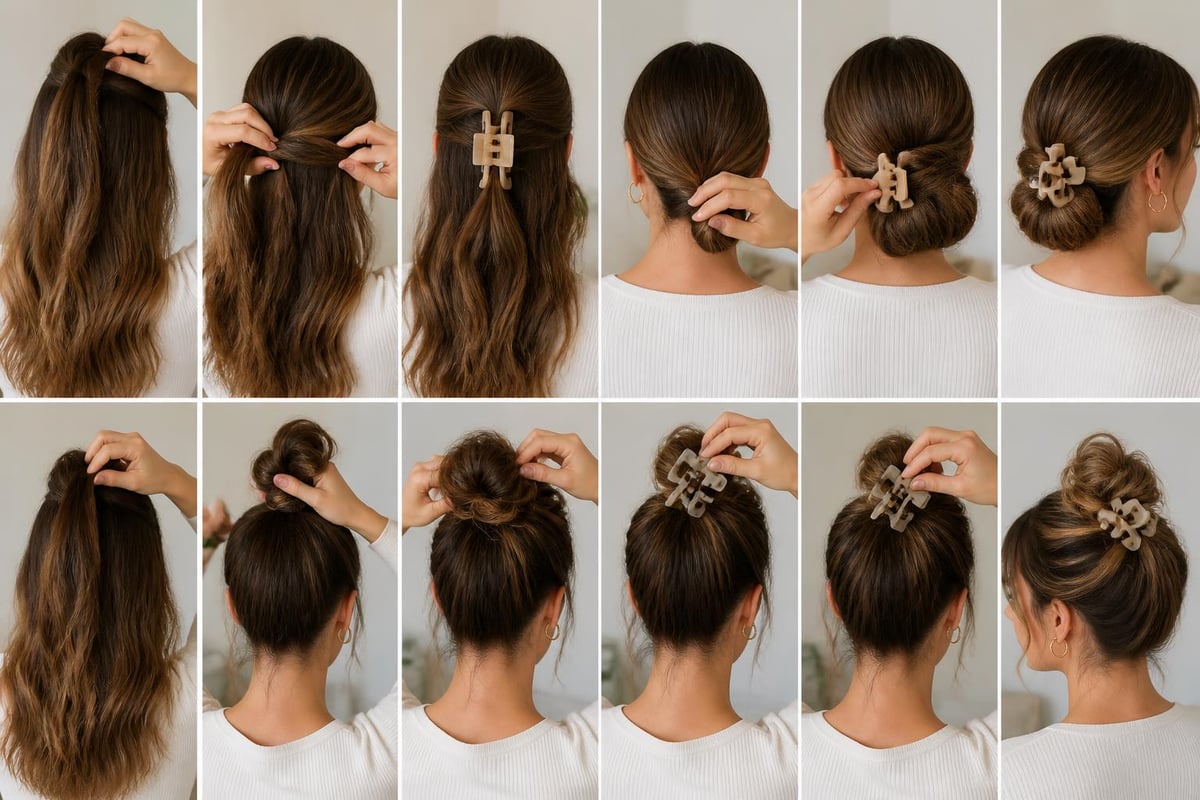
Mastering a core repertoire of claw clip hairstyles ensures you have appropriate options for both professional settings and casual environments. These claw clip hairstyles form the foundation of efficient daily styling.
The Classic Half-Up Configuration
This style works across all hair lengths from shoulder to waist. Section the top half of your hair from temple to temple, gather it at crown height, and secure with a medium-sized clip. The beauty lies in its simplicity-it keeps hair off your face while maintaining length and movement below.
For a polished finish, smooth any flyaways at the crown before clipping. The style transitions easily from office to evening by swapping a neutral clip for a statement piece.
The Twisted Low Bun
Gather all hair at the nape, twist into a rope, coil around the base, and secure the entire structure with a large clip positioned horizontally. This creates a sophisticated look that stays secure through long workdays. The horizontal positioning of the clip is key-it allows the teeth to grip the coiled structure from the side, which provides better hold than top-down placement.
The Messy Top Knot
- Flip head forward and gather hair at the crown
- Twist the ponytail while coiling around its base
- Position clip to catch both the coiled section and loose ends
- Adjust for desired messiness by pulling a few face-framing pieces
This approach appears effortless but actually requires strategic clip placement to maintain structure without looking overly constructed.
Material Quality and Long-Term Performance
Not all clips deliver equivalent performance, even when they appear similar. Material composition directly impacts durability, grip consistency, and hair health over time. Professional-grade accessories use cellulose acetate or reinforced acrylic that maintains shape integrity under repeated stress cycles.
Signs of Quality Construction
Examine the hinge mechanism first. It should operate smoothly without sticking or requiring excessive force to open. The spring should return the clip to closed position with consistent speed-too fast indicates overly aggressive tension that may damage hair, too slow suggests weak performance that won't hold.
Inspect the teeth for smooth edges. Manufacturing processes that leave rough spots or sharp edges will snag and break hair strands. Quality clips feature polished tooth surfaces that grip without catching individual hairs.
The overall finish matters for longevity. Glossy acrylic surfaces resist scratching and maintain their appearance through regular use and cleaning. Matte finishes may wear unevenly, developing shiny spots where the surface has degraded.
Pattern and Aesthetic Considerations
While function drives selection, aesthetic options have expanded dramatically. Classic solid colors in neutral tones suit professional environments, while pattern designs add personality to casual looks. The Pink Gingham Claw Clip demonstrates how bold checkerboard styling can combine with professional-grade mechanics-glossy acrylic construction resists flex under load, maintaining consistent grip regardless of the decorative pattern.
Handmade options represent another category entirely. These accessories feature artisan techniques like crochet and embroidery that create dimensional texture impossible to replicate through mass production. Each piece carries slight variations that make it unique, appealing to those who value craftsmanship alongside function.
Solving Common Application Challenges
Even with quality accessories, certain hair conditions and styling goals present obstacles. Understanding the underlying causes helps develop effective solutions.
The Slipping Clip Problem
When clips slide out of position or fall completely, the issue typically stems from one of three causes: insufficient hair in the section being clipped, incompatible clip size for the hair volume, or improper tooth engagement.
To diagnose, attempt the style again with attention to how deeply the teeth penetrate the hair section. If they barely catch the outer layer, gather more hair into the section or switch to a clip with longer teeth. If the clip feels secure initially but loosens over time, the spring tension may be inadequate for your hair density.
Immediate fixes include:
- Adding texture spray before clipping to increase grip
- Twisting sections more tightly before securing
- Positioning clips at angles that work with gravity rather than against it
- Layering bobby pins beneath the clip for additional support
Preventing Creases and Dents
Fine and medium hair often shows creasing where the clip grips. This becomes problematic when transitioning from up to down styles throughout the day. Prevention involves both clip selection and strategic placement.
Choose clips with broader tooth surfaces that distribute pressure across more hair. Position the clip where any resulting crease will be hidden if you release your hair-typically slightly lower than you might naturally place it. For styles you'll wear down later, opt for scrunchies or other crease-free alternatives during the updo phase.
Managing Different Textures Simultaneously
Layered haircuts, color-treated sections with varying porosity, or naturally combination textures require adjusted technique. The key involves recognizing that a single section may need different hold at different points.
When clipping hair with multiple textures, position the teeth to grip the coarsest section most securely-this provides the anchor point. The finer sections will naturally compress around it. If necessary, use a smaller secondary clip to control face-framing pieces that won't stay contained in the main clip.
Integrating Clips Into Complete Styling Systems
A claw clip works most effectively as part of a coordinated approach to hair management rather than as an isolated tool. Professional results come from understanding how accessories, products, and techniques complement each other.
Pre-Styling Product Application
Hair that's been properly prepared accepts styling and holds it longer. This doesn't require extensive product layering-targeted application of the right formulas makes the difference.
For styles that will be clipped for hours, apply a light volumizing product at the roots while hair is damp. This creates texture that helps clips grip without adding weight that pulls styles down. Avoid heavy oils or serums on the sections you'll be clipping-they create slip that undermines hold.
Once the clip is in place and the style is set, finish work matters. Smoothing flyaways around the clip creates polish without disrupting the hold. A lightweight finishing product can be applied with a small brush or directly from a stick format, targeting only the areas that need refinement.
Coordinating Accessories for Layered Looks
Multiple claw clips can be styled together for complex updos, but this requires intentional planning. Each clip should serve a specific structural purpose rather than being purely decorative.
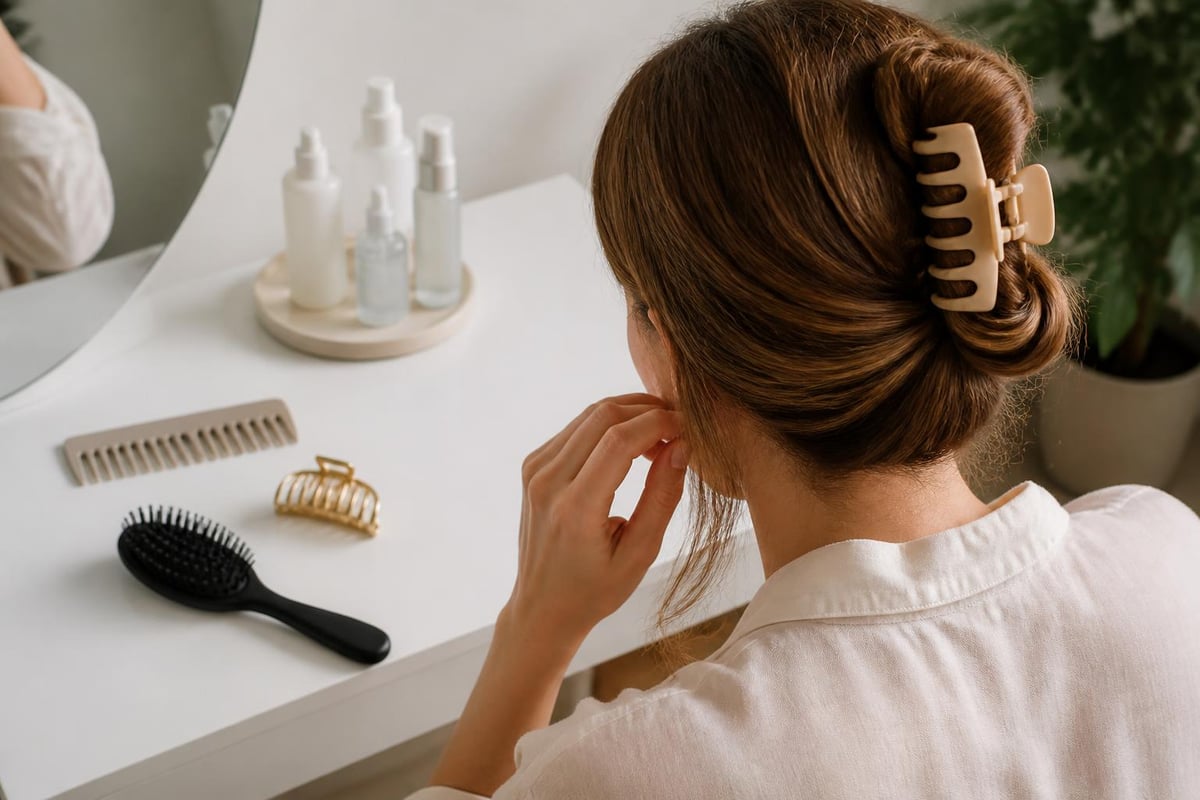
Start with the largest clip as your anchor point, securing the bulk of your hair. Add smaller clips to control sections that fall outside the main hold-sides, crown pieces, or layers that are too short to reach the primary gathering point. This creates a cohesive style rather than a haphazard collection of clipped sections.
Seasonal Styling Adaptations and Trend Integration
Hair styling needs shift with weather conditions, fashion trends, and lifestyle changes throughout the year. A versatile accessory collection allows you to adapt without requiring completely different techniques.
Weather-Responsive Adjustments
Humidity affects how well styles hold and how frizz develops around clips. In high-humidity environments, start with hair that's been treated with anti-humidity products and completely dried. Damp sections will absorb moisture from the air, swell, and work loose from clips.
Cold, dry winter air creates static that makes hair difficult to control when clipping. Combat this with leave-in conditioning products that add moisture without weight, and consider clips with slightly more aggressive grip to compensate for hair's tendency to fly away from the style.
Current Trend Alignment
Fall 2026 hairstyle trends emphasize elegant updos and sophisticated chignons, many of which can be achieved with strategic claw clip placement. The elevated aesthetic doesn't require complicated techniques-it comes from precise execution and accessory selection that complements rather than dominates the style.
Tortoiseshell patterns, metallic finishes, and minimalist solid colors currently dominate trend-conscious selections. However, individual style expression matters more than strict trend adherence. A classic navy clip provides timeless versatility, while a pink gingham pattern adds personality that stands out in professional settings without appearing unprofessional.
For those drawn to artisan aesthetics, handmade crochet designs offer dimensional texture and craftsmanship that mass-produced accessories can't replicate. These pieces work particularly well for creative professional environments or social occasions where individual style expression is valued.
Hair Health Considerations and Damage Prevention
Any accessory that grips hair carries potential for damage if used incorrectly or if the accessory itself is poorly constructed. Understanding the mechanisms of damage helps you make choices that protect hair health while still achieving the styles you want.
Mechanical Stress Points
Hair breakage from clips typically occurs at three locations: where teeth penetrate the section, at the compression point where the clip closes, and along edges where hair bends sharply around the accessory's shape. Quality construction minimizes these risks through smooth tooth surfaces, appropriate tension levels, and ergonomic shaping.
Avoid leaving clips in the exact same position day after day. This creates repetitive stress at identical points along the hair shaft, increasing breakage risk. Vary your style height and clip placement to distribute any mechanical stress across different sections.
Protective practices include:
- Releasing clips before sleeping to prevent overnight stress
- Choosing clips proportional to your hair volume
- Rotating between multiple clips to extend their functional lifespan
- Replacing clips when springs weaken or teeth develop rough edges
Chemical and Color-Treated Hair Adaptations
Chemically processed hair has altered structure that makes it more vulnerable to mechanical damage. The cuticle layer may be compromised, and the cortex can be weakened by oxidation or alkaline treatments. This doesn't mean avoiding clips-it means selecting and using them more carefully.
Opt for clips with gentler spring tension and smoother tooth surfaces. Avoid metal components that can react with chemical treatments or create harsh stress points. If your hair shows signs of breakage around clipped areas, reassess both your accessory quality and your application technique.
Building a Versatile Collection
A well-curated accessory collection provides options for different styling needs, hair conditions, and aesthetic preferences without requiring extensive storage or decision fatigue. Strategic selection focuses on versatility and quality over quantity.
The Core Three-Piece Foundation
Start with three clips that cover your essential needs:
- A large neutral clip for full updos and thick hair management
- A medium patterned or colored clip for half-up styles and visual interest
- A small specialty clip for accent work or fine hair sections
This foundation addresses functional requirements while allowing personal style expression. The Pixie Garden offers options across this spectrum-from the classic navy blue claw clip for professional versatility, to the gingham pink claw clip for bold pattern play, to handmade crochet designs for artisan appeal.
Expansion Based on Lifestyle Needs
Beyond the core collection, additions should reflect your actual styling patterns. If you wear your hair up daily for work, invest in multiple large clips so you're never without a clean option. If you style hair up primarily for workouts or household tasks, prioritize clips with maximum hold over aesthetic variety.
Consider also how accessories integrate with your broader wardrobe. Clips that complement your regular color palette or match metals you typically wear create cohesive overall appearances without requiring thought each morning.
| Collection Type | Number of Pieces | Priority Features |
|---|---|---|
| Minimal Essentials | 3-4 clips | Size variety, neutral colors, professional quality |
| Active Lifestyle | 5-7 clips | High hold, sweat-resistant materials, easy cleaning |
| Fashion-Forward | 8-12 clips | Trend pieces, pattern variety, statement designs |
| Professional Variety | 6-8 clips | Conservative aesthetics, reliability, all-day comfort |
Maintenance and Longevity Practices
Quality accessories justify their cost through extended functional lifespans, but this requires basic maintenance. Regular cleaning prevents product buildup that can interfere with grip, while proper storage protects delicate components.
Cleaning Protocols
Wash clips every 2-3 weeks, or more frequently if you use heavy styling products. Lukewarm water with mild soap removes most buildup-avoid harsh detergents that can damage acrylic finishes or weaken spring mechanisms. Use a soft toothbrush to clean between teeth where product accumulates.
Rinse thoroughly to remove all soap residue, which can leave films that make clips slippery. Dry completely before storage to prevent water spots or mineral deposits. For handmade options with fabric elements, check specific care instructions since some materials may not tolerate full water immersion.
Storage Solutions
Store clips where they won't be crushed under other items or tangled with other accessories. Dedicated organizers with individual compartments work well, or simple solutions like hanging organizers that display clips for easy selection while protecting them from damage.
Avoid storing clips in humid environments like bathrooms where moisture can affect spring mechanisms. A bedroom drawer or closet shelf maintains accessories in optimal condition.
The right claw clip transforms hair styling from a time-consuming challenge into an efficient, reliable process that delivers professional results. By understanding how size, shape, material quality, and application technique interact with your specific hair type and styling goals, you can build a versatile approach that works for every occasion. The Pixie Garden curates accessories selected by a licensed cosmetologist specifically to provide this level of professional performance with everyday ease, ensuring you always have the right tool for polished, effortless styles.
